Duskywings
This is a Horace's Duskywing, nectaring on echinacea. This species flies from April through September. In the summer months, their closest look-alike species is the Wild Indigo Duskywing. The main difference is that a Horace's Duskywing has a single white dot (glassy cell) near the center of each forewing. Wild Indigo Duskywings typically do not have this dot.
Juvenal's Duskywing, photographed April 19, 2016. This is a spring-flying species. Note that Juvenal's Duskywings only fly in the spring moths. (If you see a butterfly that looks like this in the summer months, it is probably a Horace's Duskywing.)
This is a Wild Indigo Duskywing on echinacea. It is the most common duskywing in our area. Notice that it lacks the single white dot near the center of the forewing.
This butterfly is a Funereal Duskywing, a rare stray to Ohio. Funereal Duskywings typically live in the southwestern U.S., but there have been a handful of reported sightings in northeastern states in recent years. Some researchers think this species might be expanding its range. The gleaming white border on its hindwings is a distinctive feature.
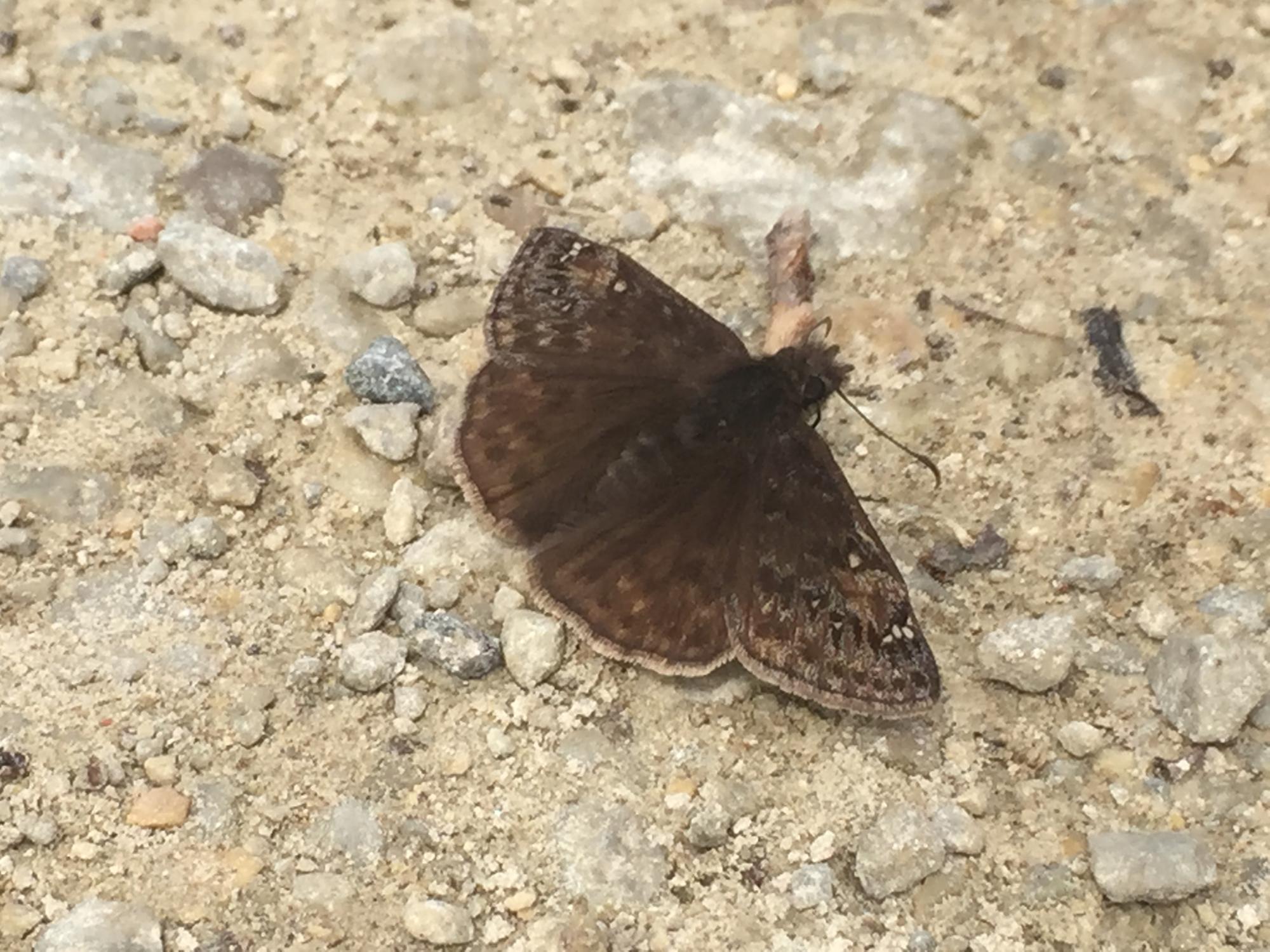
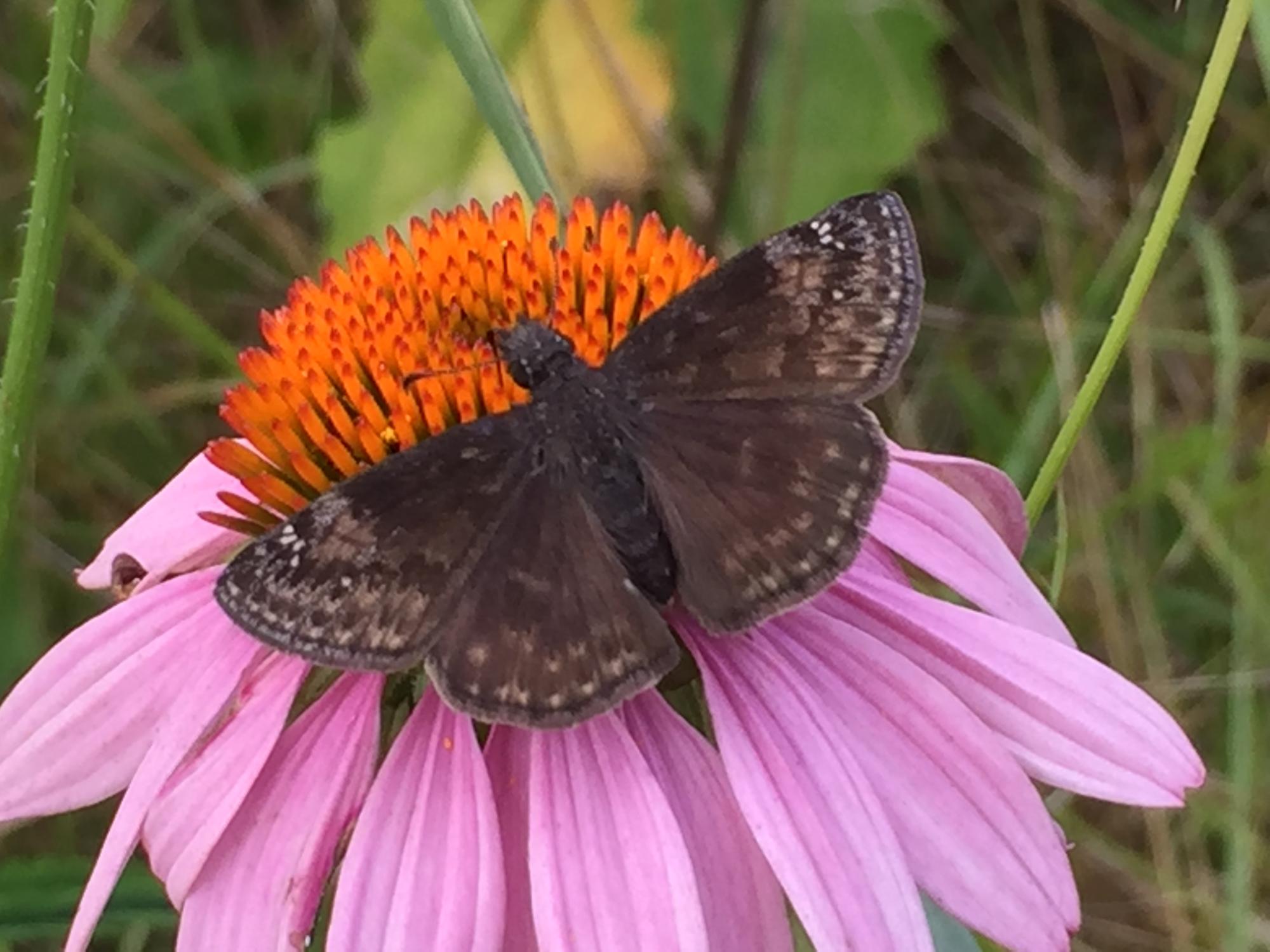
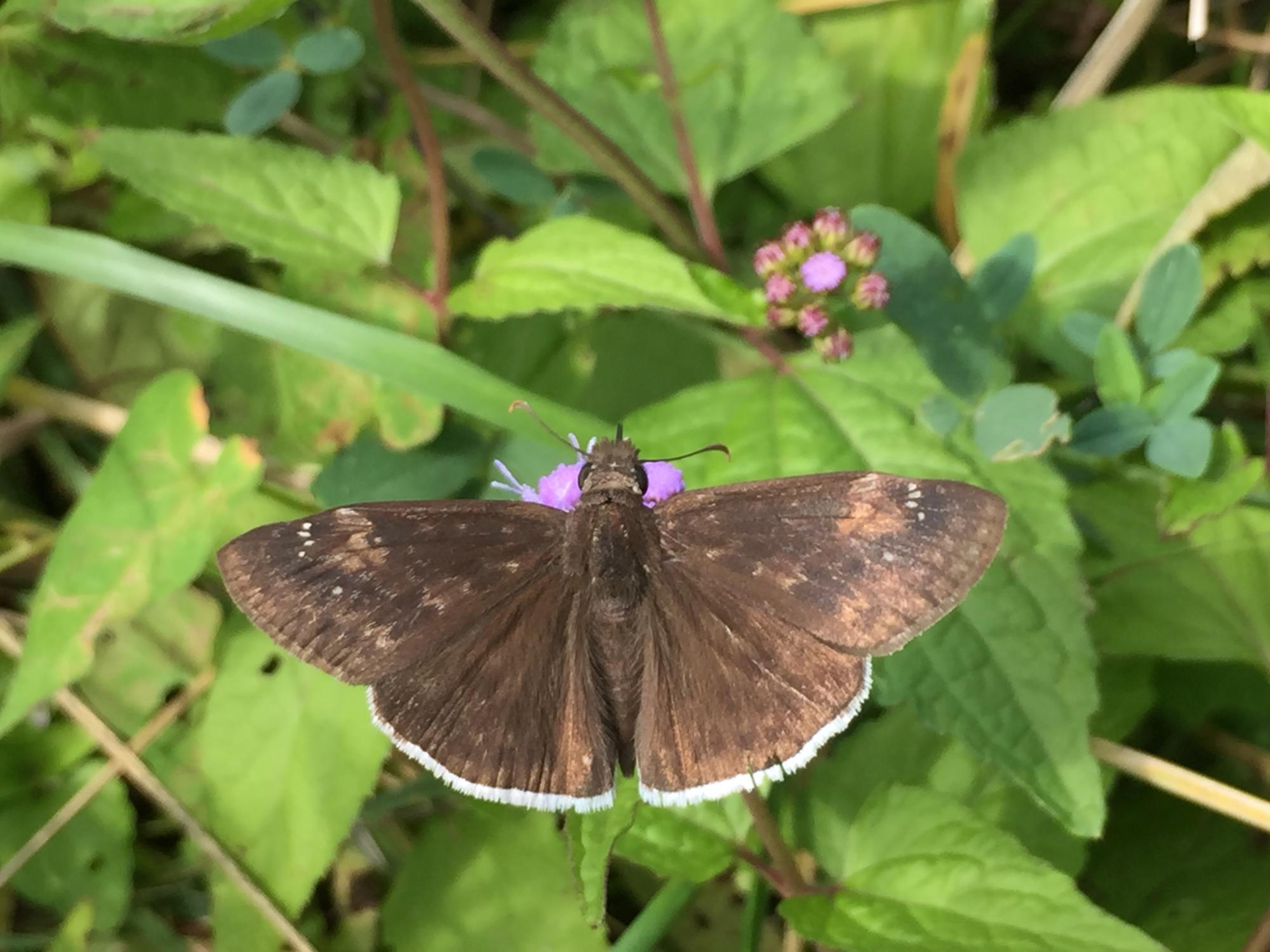
I have found three Funereal Duskywings, all at Cox Arboretum and all in the month of September: September 11, 2015, September 8, 2017, and September 1, 2018.
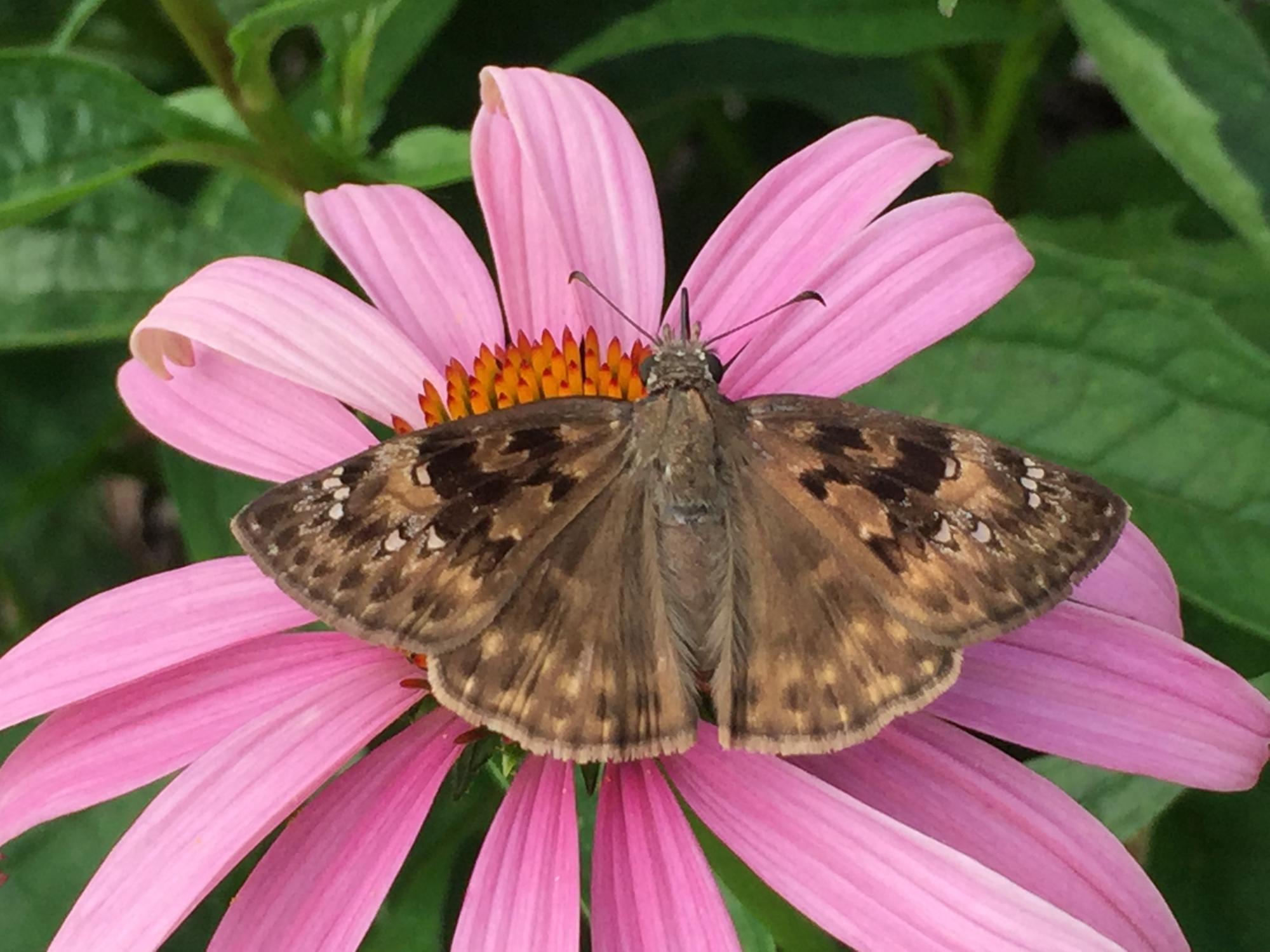

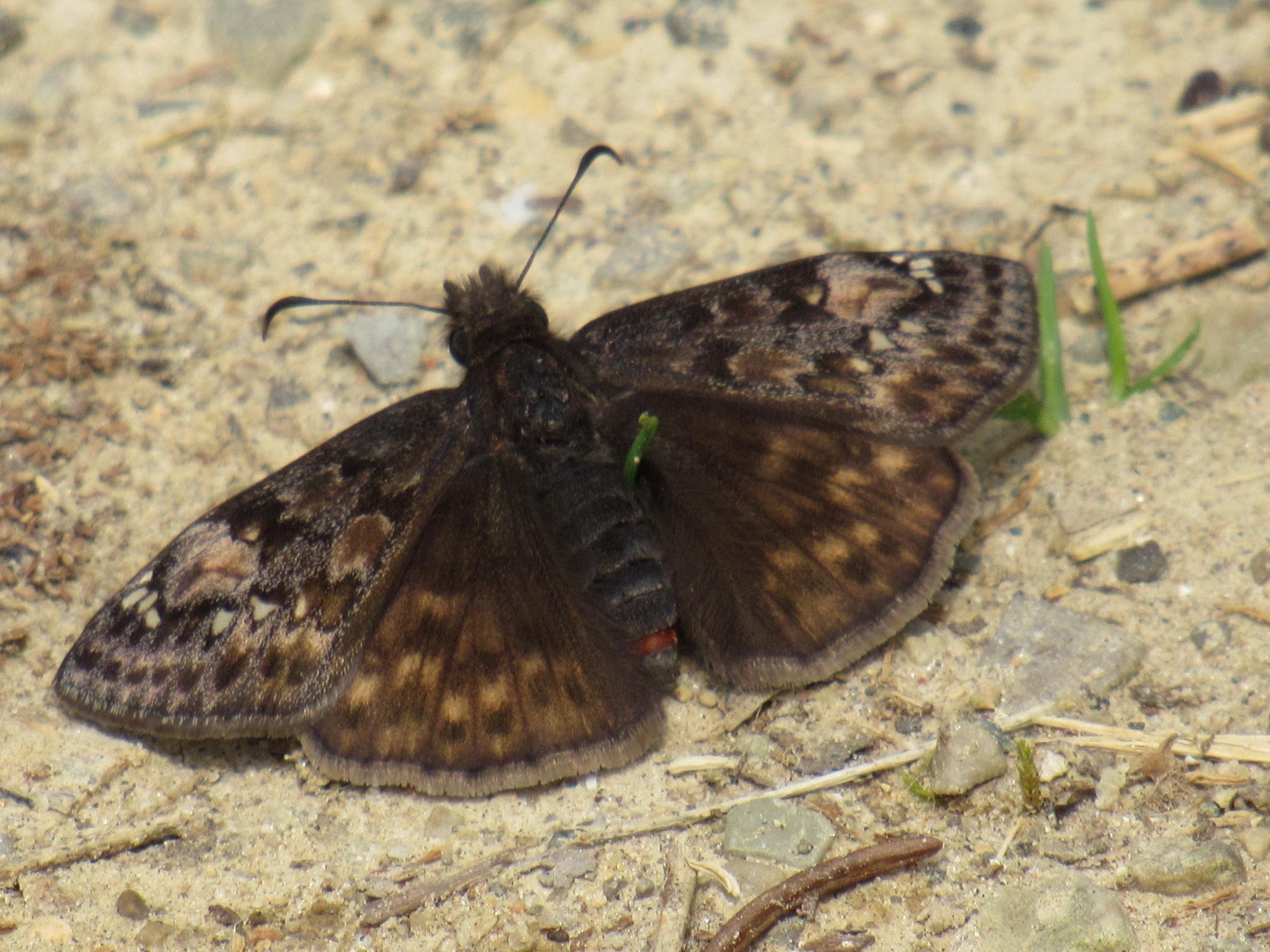
Another Juvenal's Duskywing, photographed at Germantown MetroPark. These butterflies are fairly common near wooded areas in April and May. They are easy to confuse with Horace's Duskywings in the spring. The easiest way to distinguish the two species is to look at the undersurface of their hindwings. Juvenal's Duskywings have two large spots on the undersurface of their hindwings, but Horace's Duskywings do not.
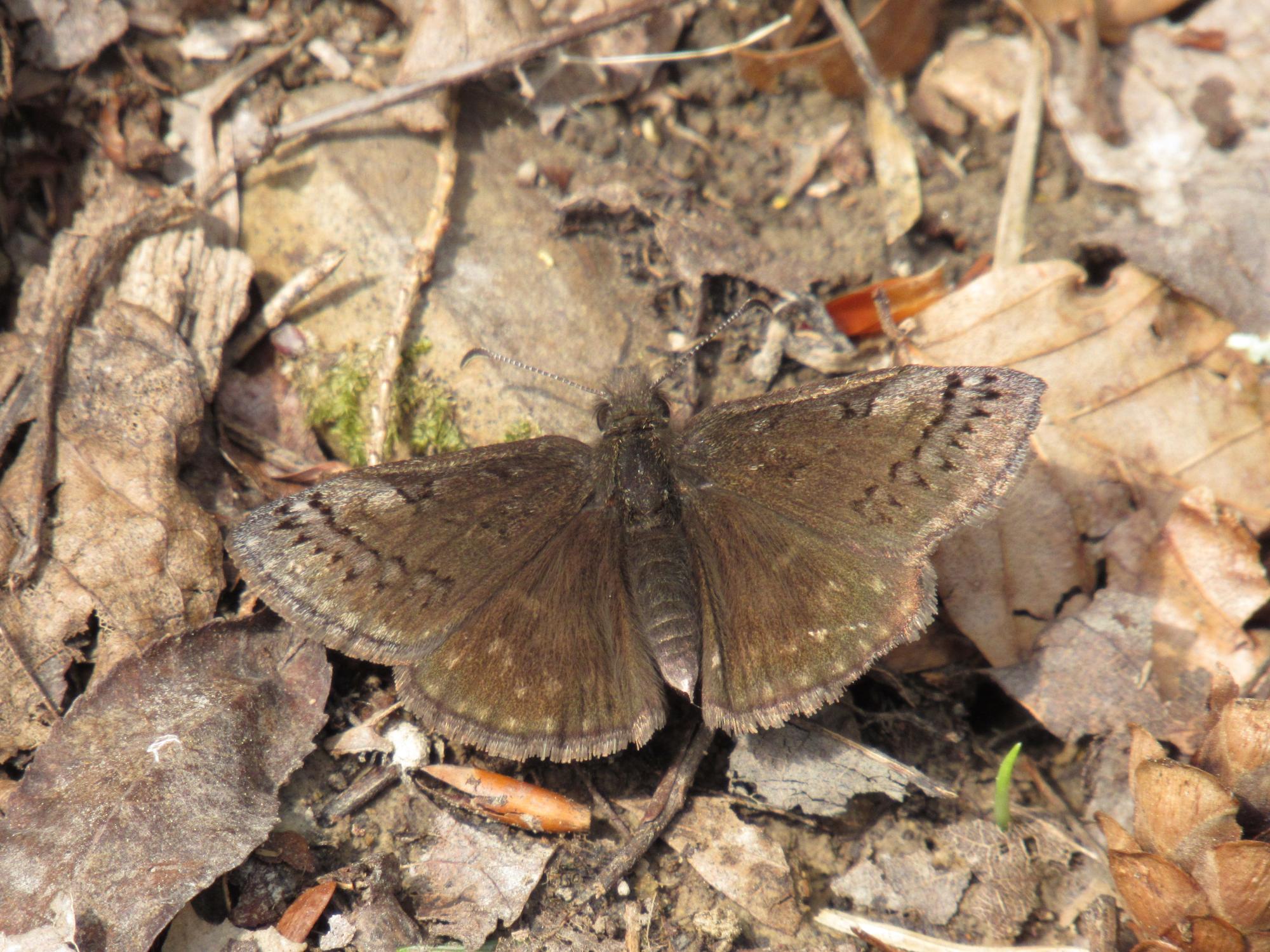
This is a Dreamy Duskywing, photographed May 10, 2025, at Hocking Hills. Both the Dreamy Duskywing and the similar Sleepy Duskywing (below) lack white spots on their wings. This trait sets them apart from the four species above. Notice the long palps on this Dreamy Duskywing.
This Sleepy Duskywing was photographed April 29, 2022 at Hocking Hills (eastern Ohio). Sleepy Duskywings are slightly larger than Dreamy Duskywings. They have a more prominent chain band on their forewings and shorter palps. There are historical records of Sleepy Duskywings occurring in our area, including Montgomery and Greene Counties, but I have never seen Sleepy Duskywings in our part of the state.
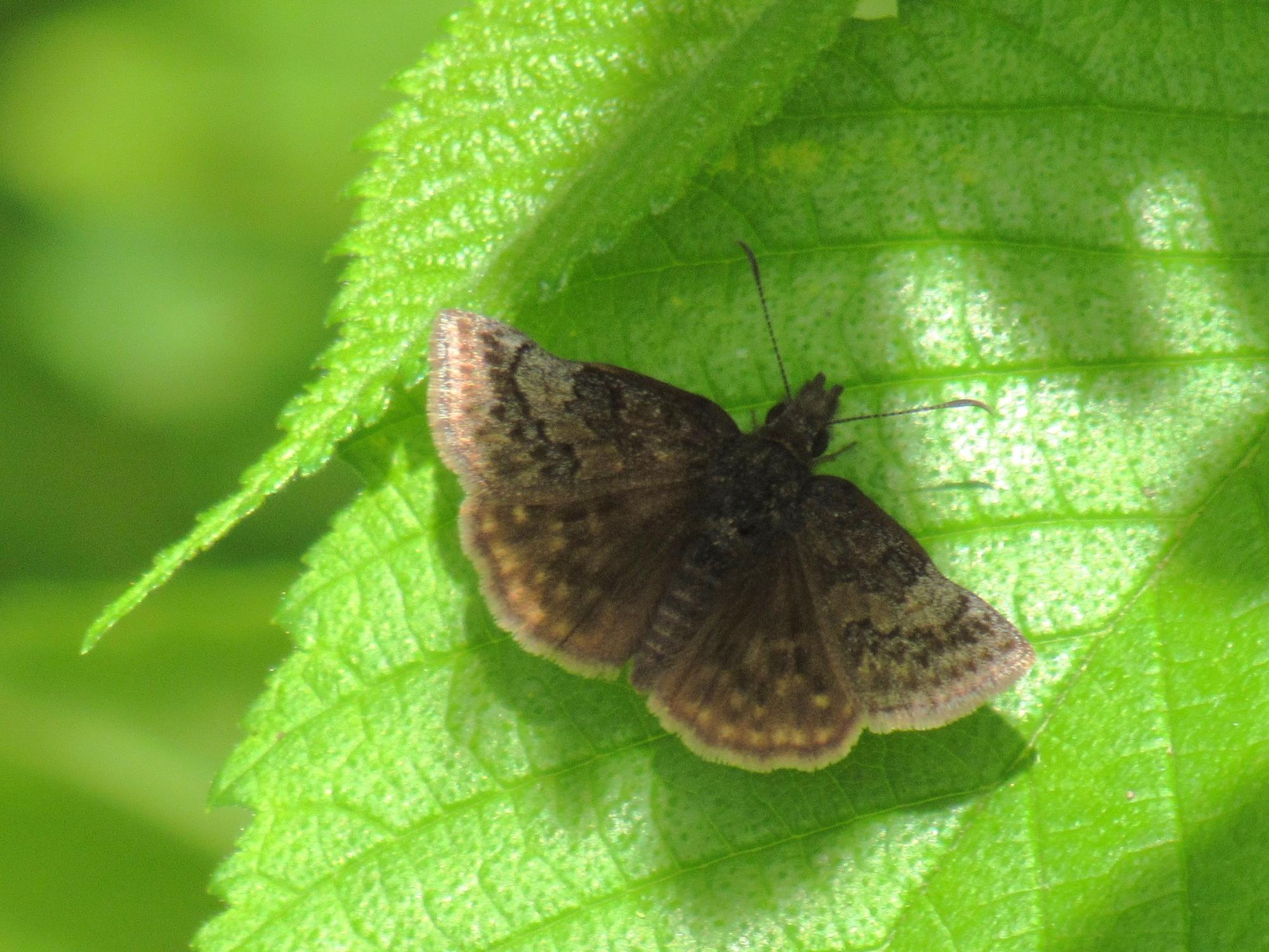
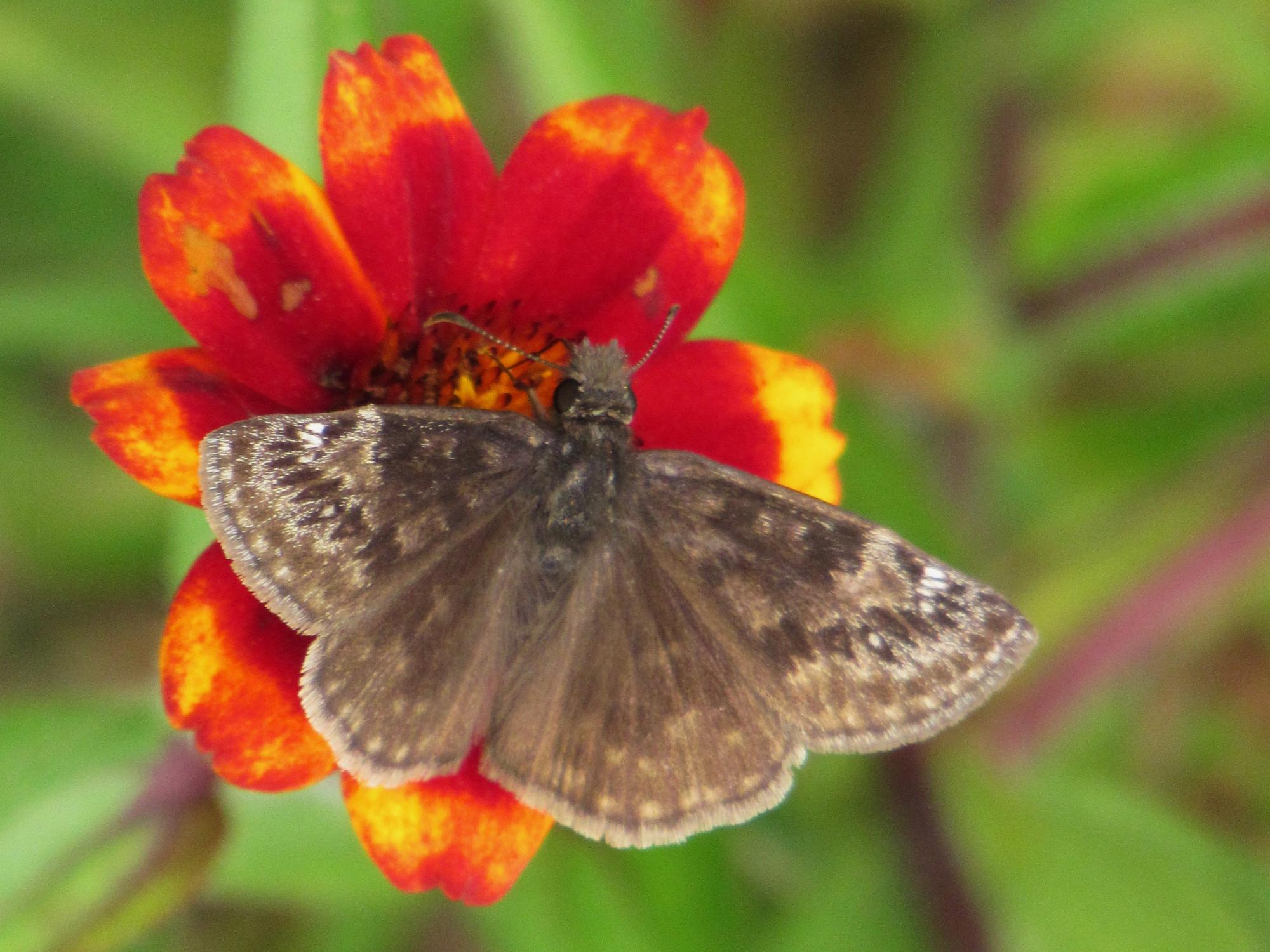
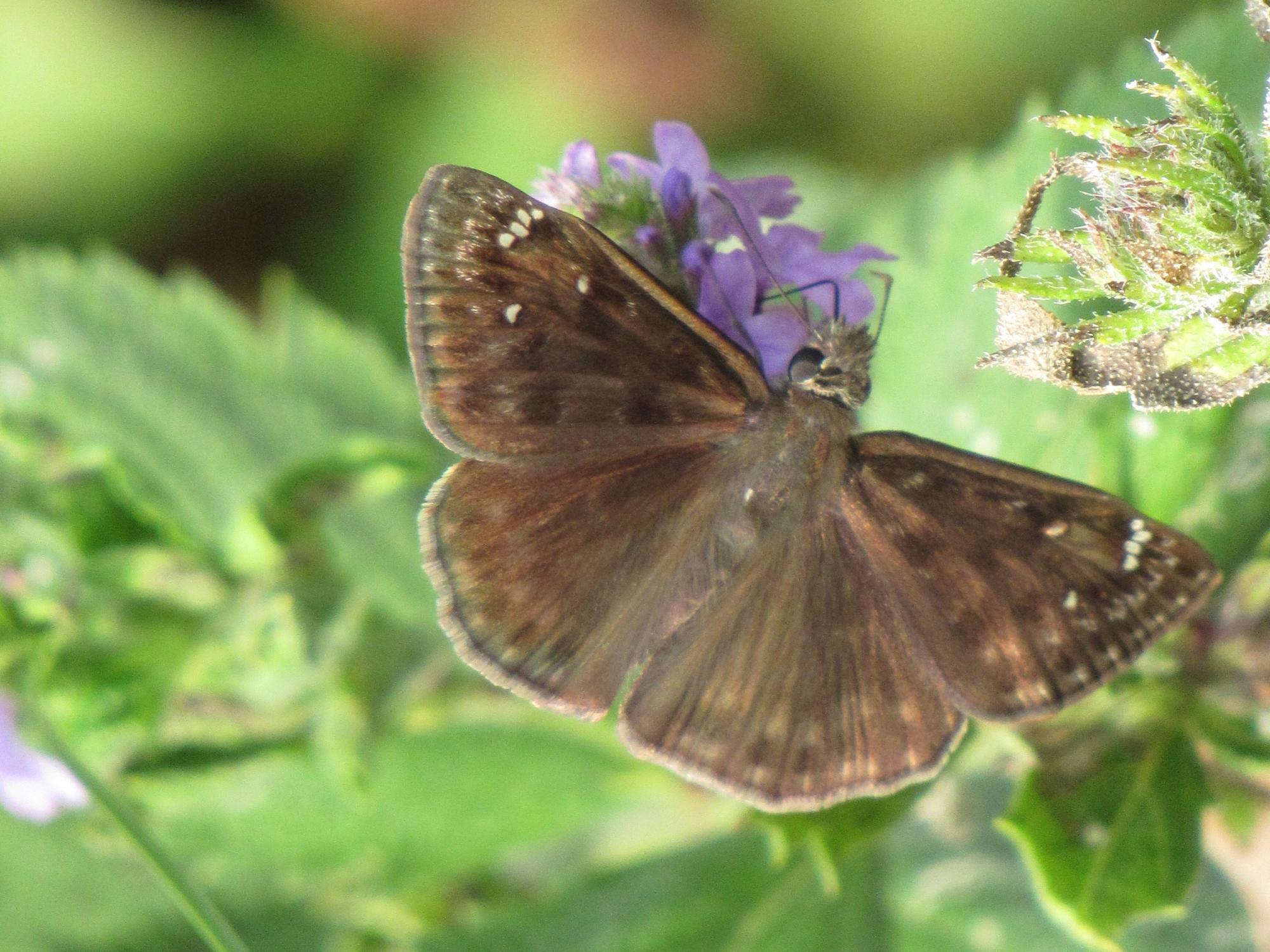
Horace's Duskywings are not very common in our area, compared to the more abundant Wild Indigo Duskywings. I have found Horace's Duskywings at Caesar Creek, Germantown MetroPark, Cox Arboretum, Huffman Prairie, Sugarcreek MetroPark, and Brookview Reserve in Bellbrook, where this individual was photographed.
Another Wild Indigo Duskywing. This species flies from April through October.