Northern Pearly Eye, Eyed Brown, AND aPPALACHIAN bROWN
Northern Pearly Eye, basking with its wings open. This species usually rests with wings closed, so it can be difficult to get a photo like this. Northern Pearly Eyes fly from late May through August. They are slightly larger than our two species of Eyed Browns.
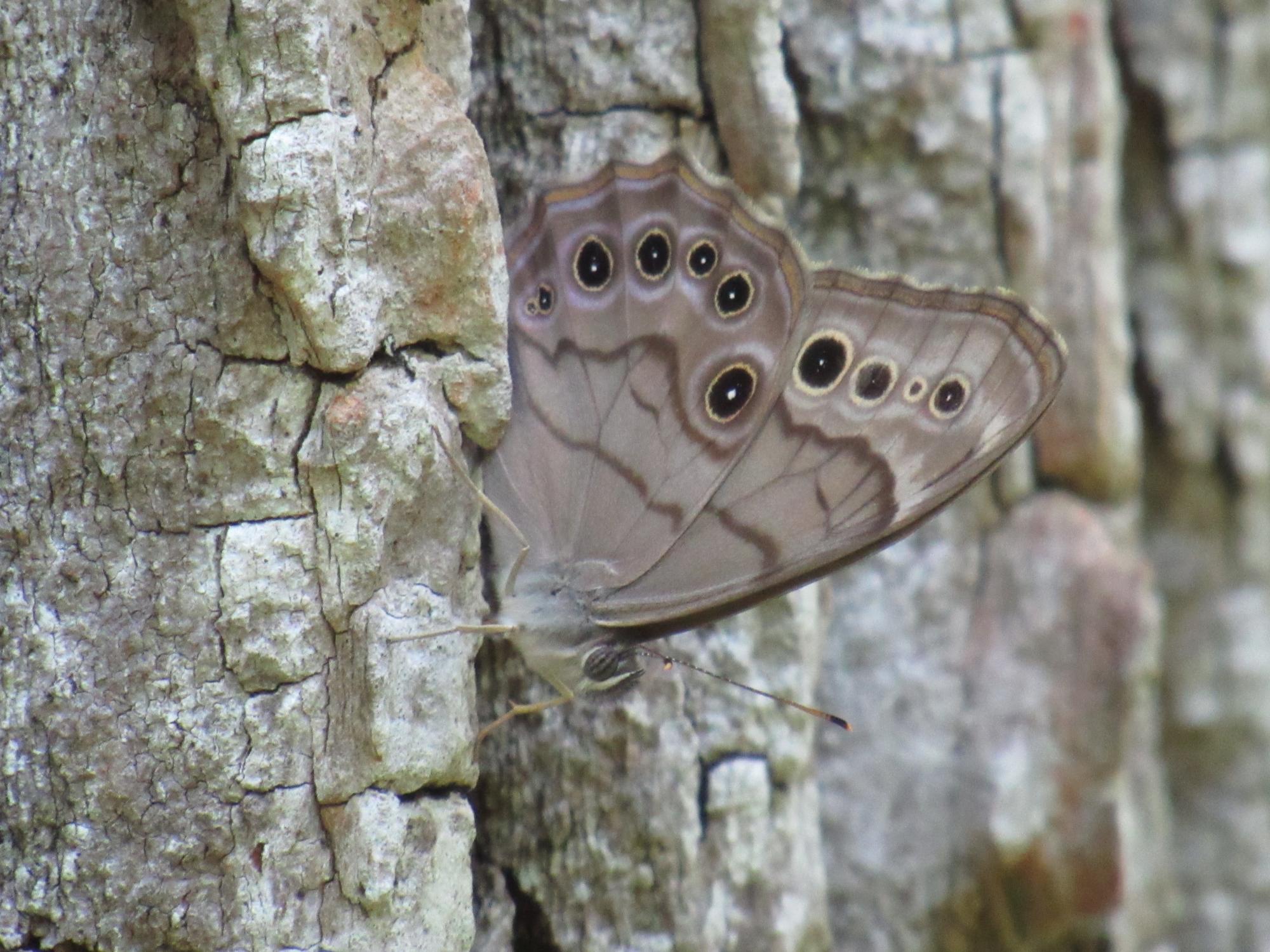
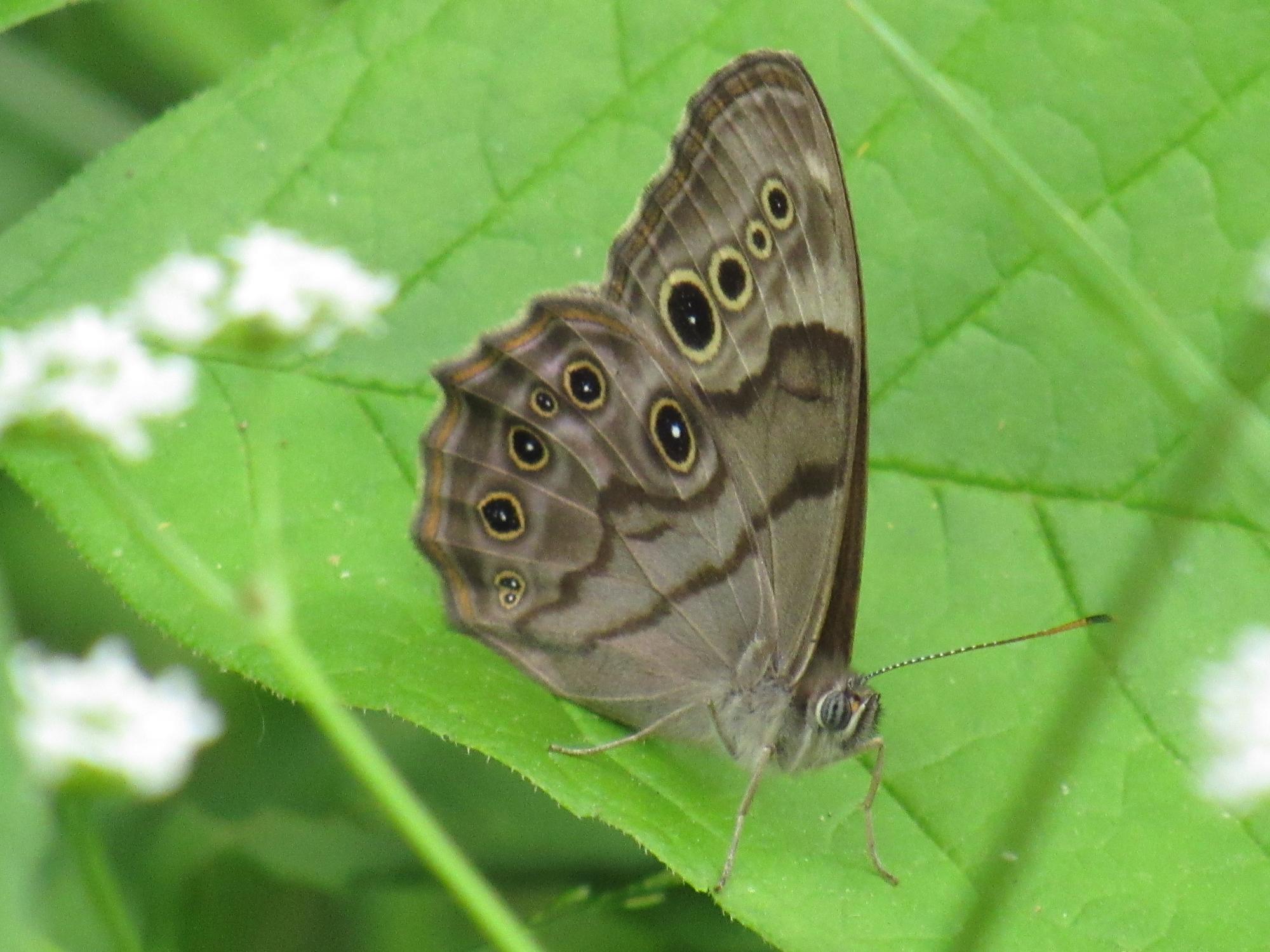
Underside of a Northern Pearly Eye butterfly. This species is found in wooded areas, often near wetlands or wet woods. Northern Pearly Eyes are a shy, secretive species, and they prefer heavily shaded habitat.
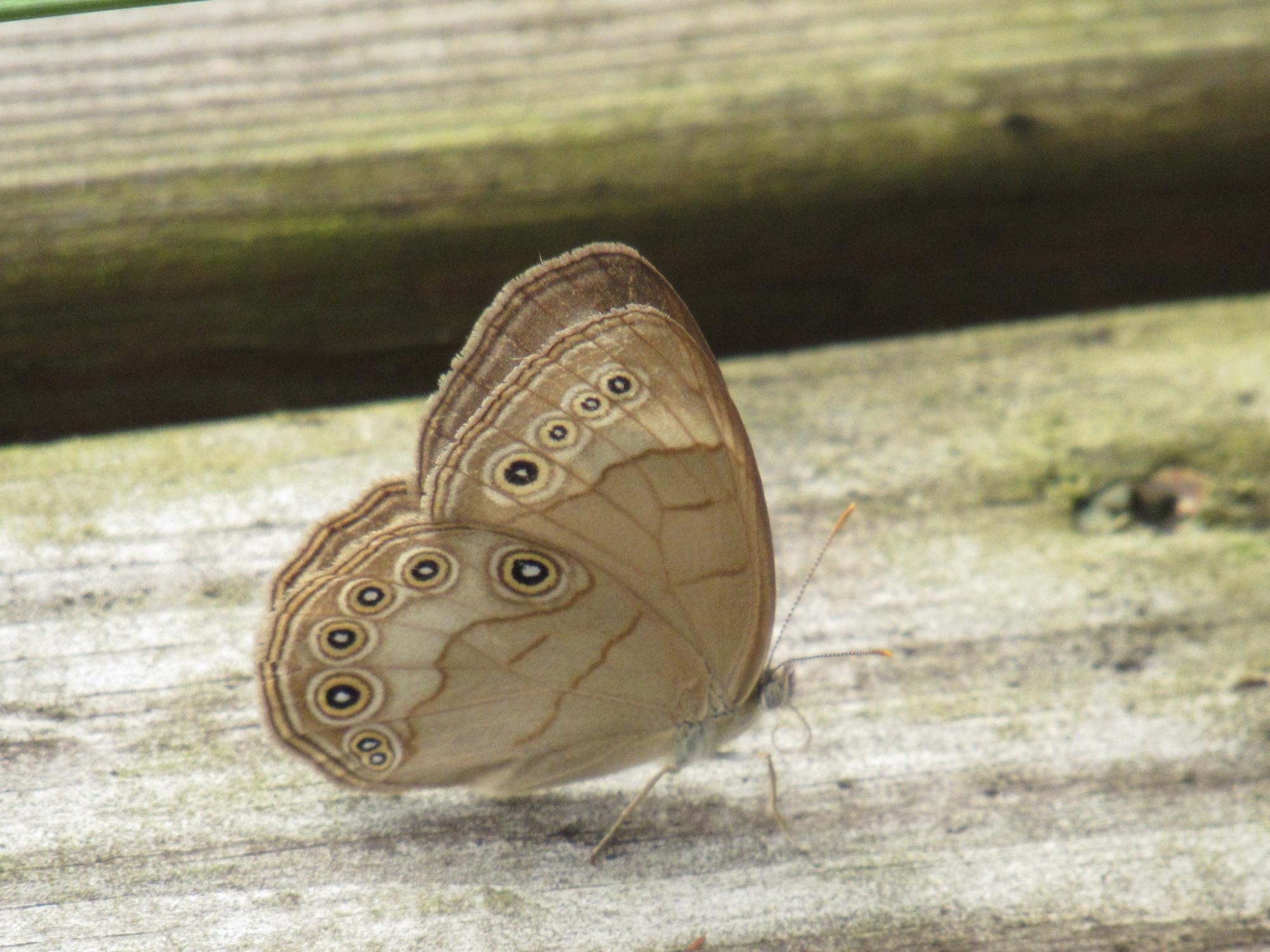
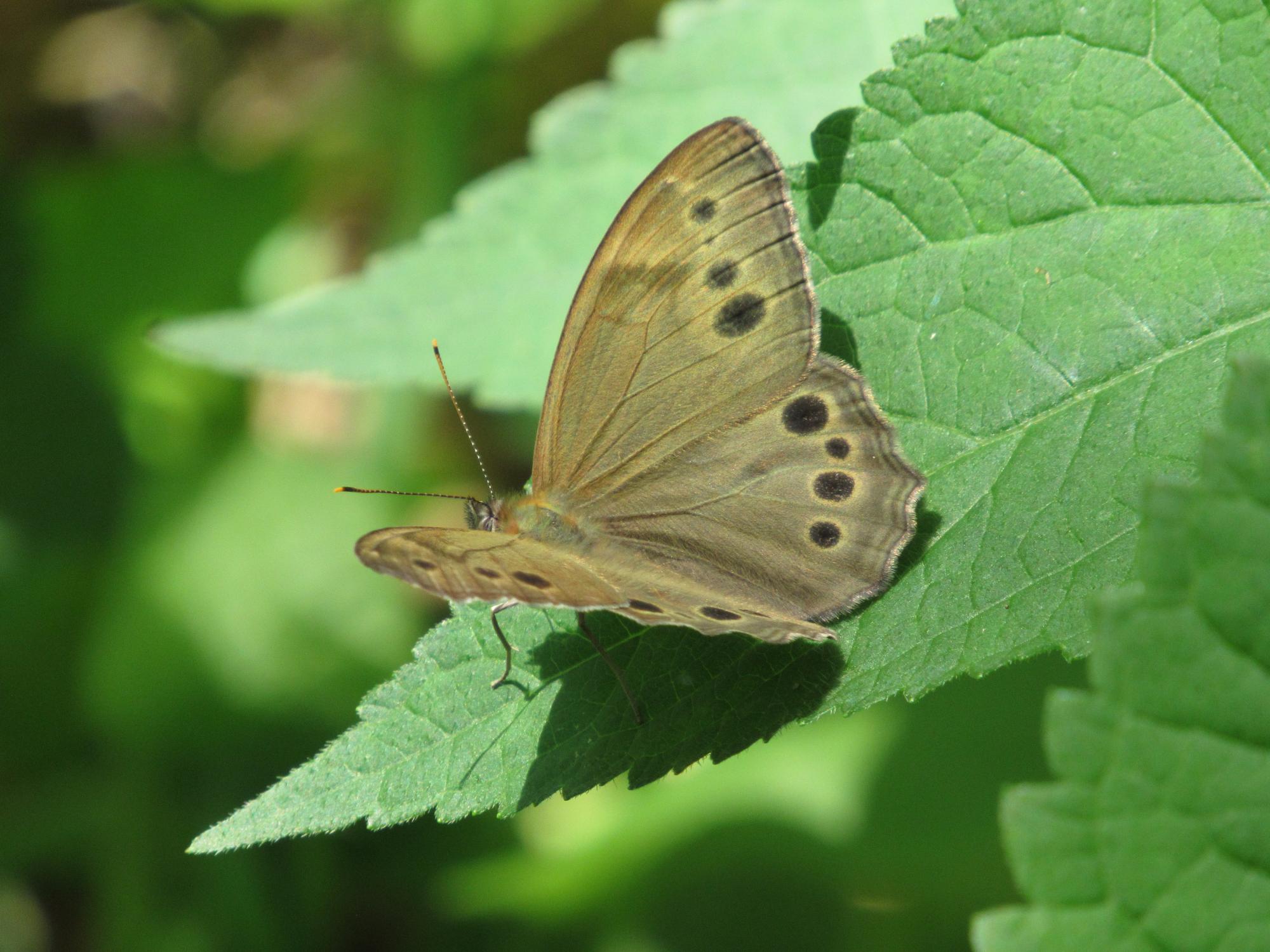
This butterfly is an Eyed Brown. This species is extremely similar to the Appalachian Brown (below). However, Eyed Browns have a more jagged post-median line. Both of these butterflies are localized and uncommon wetland species.
This is an Appalachian Brown. Notice that the post-median line is smoother than in the Eyed Brown (above). Also, look at the four eyespots on the upper wing. The middle two eyespots are smaller than the outer two spots. This is characteristic of an Appalachian Brown.

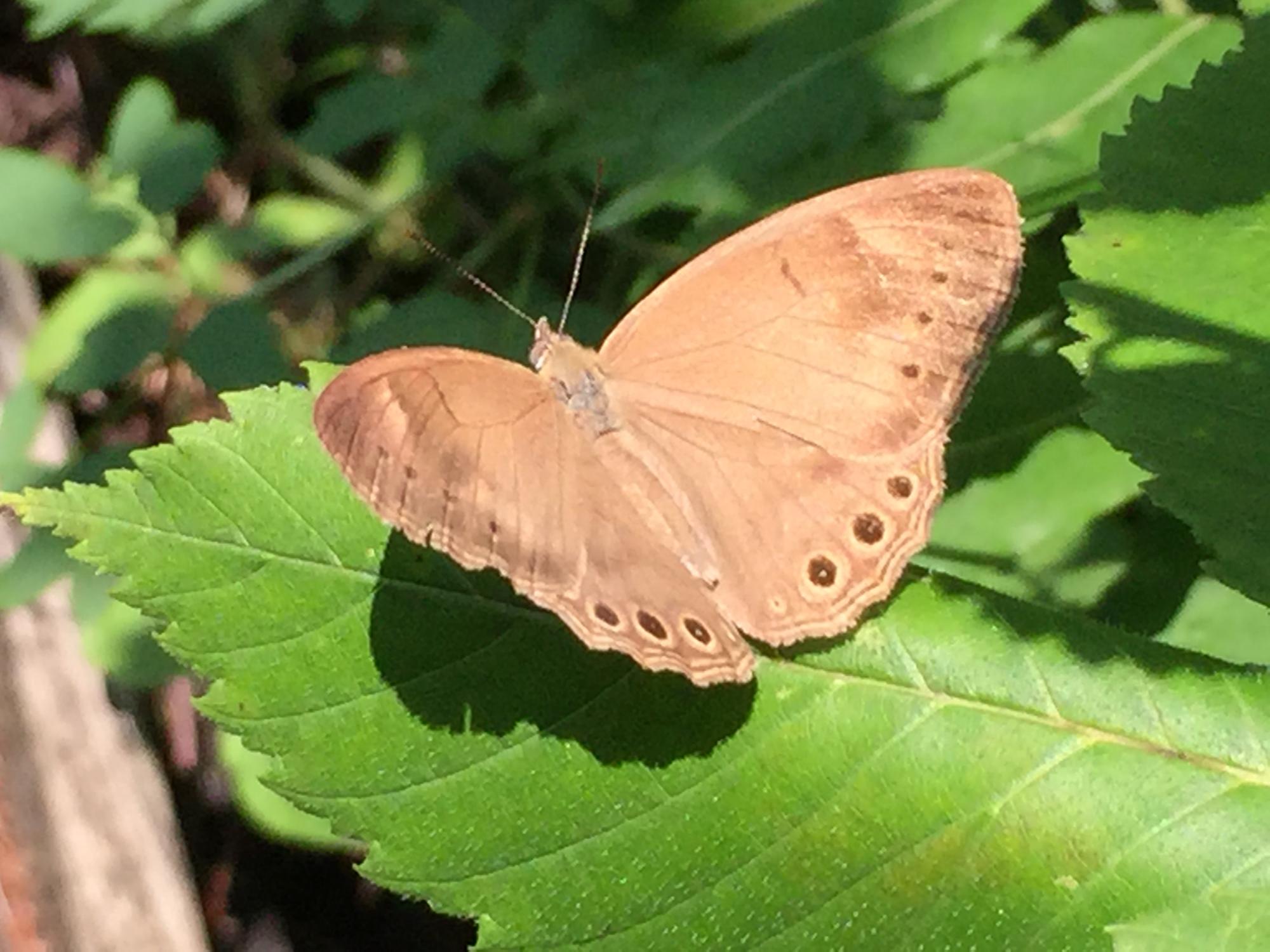
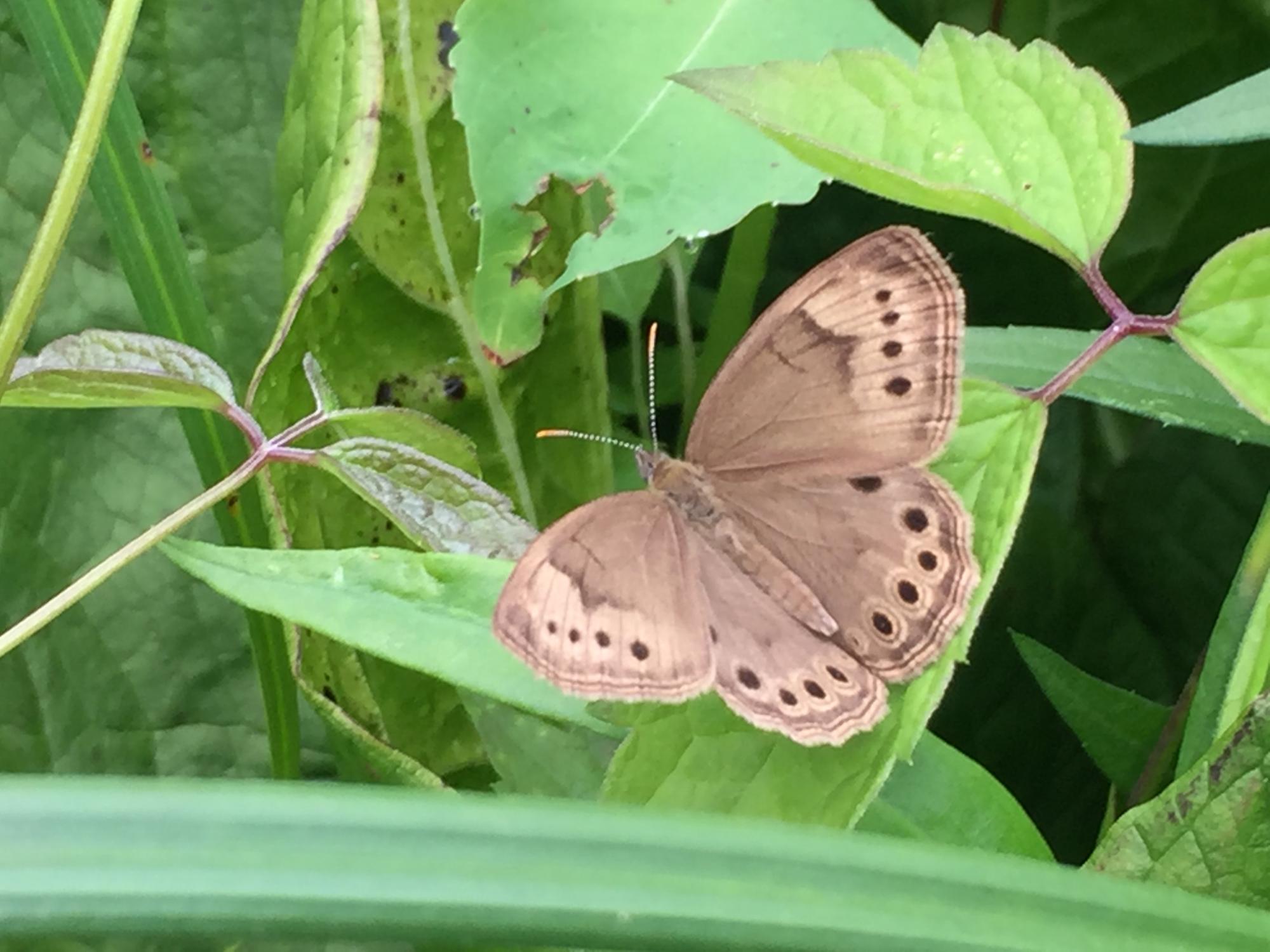
This is an Eyed Brown butterfly with its wings open. I regularly find this species at Siebenthaler Fen in Beavercreek, from late May through September. They also live in a few of the other Beaver Creek Wetland parks as well. Eyed Browns prefer open and sunny habitat, whereas Appalachian Browns (below) prefer shaded wetlands.
This is an Appalachian Brown with its wings open. These butterflies can be found at Cedar Bog in Urbana during the summer months.
Northern Pearly Eyes are widespread but they are seldom abundant. I have found them in many different locations, but never in great numbers. This individual was photographed at Caesar Creek.
Northern Pearly Eye perched on a tree at Garland Reserve in Fairborn. I have also seen this species at Siebenthaler Fen, Sugarcreek Reserve, Cedar Bog, Germantown MetroPark, Beavercreek Wildlife Area, Narrows Reserve, and the Creekside Reserve in Beavercreek.