JUNIPER hairstreak
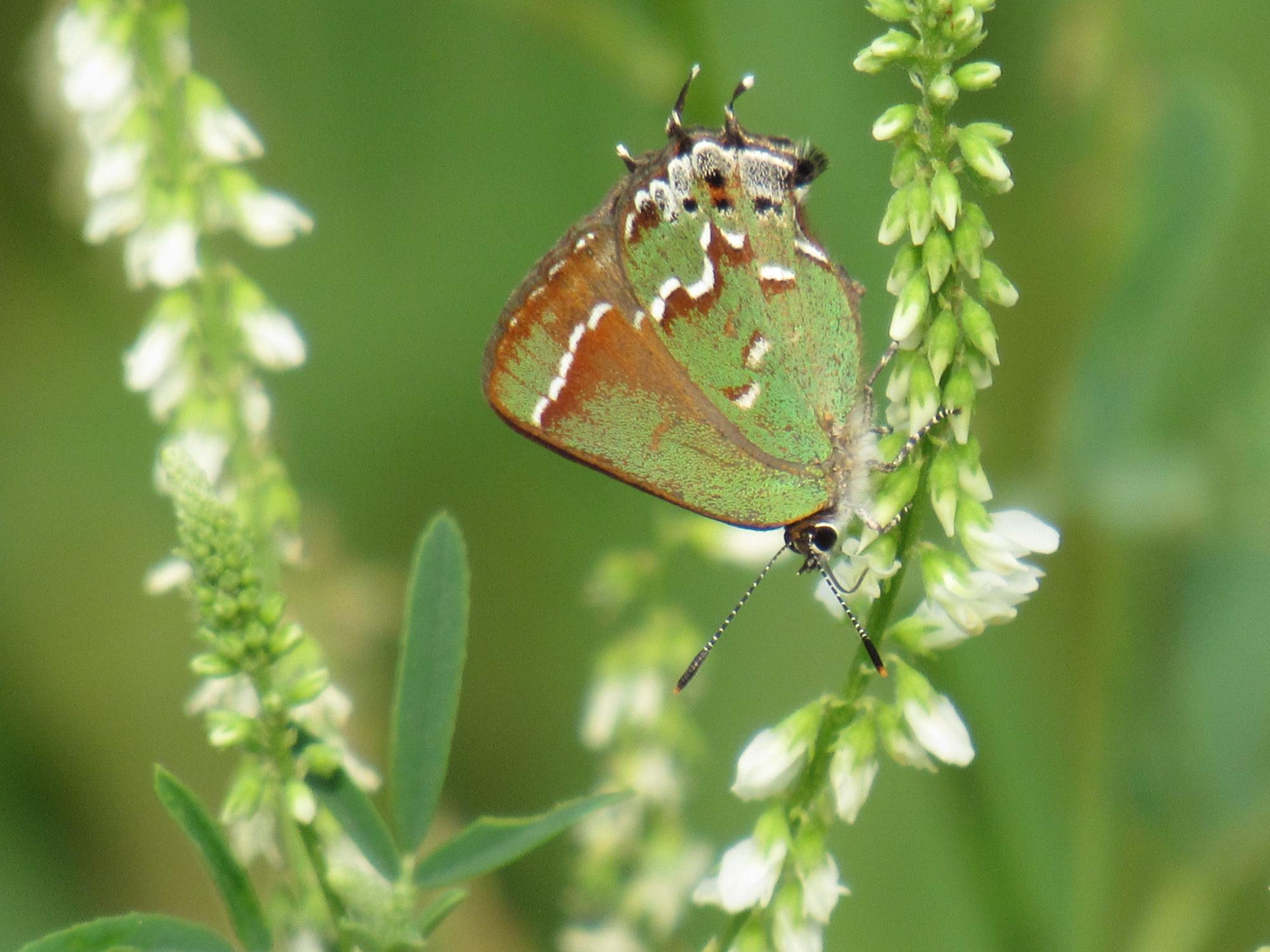
Juniper Hairstreaks are usually described as being uncommon in Ohio. However, several of our local parks have the dry cedar glade habitat that these butterflies love. Cox Arboretum, Germantown MetroPark, Twin Creek MetroPark, and Oakes Quarry all have populations of Juniper Hairstreaks.
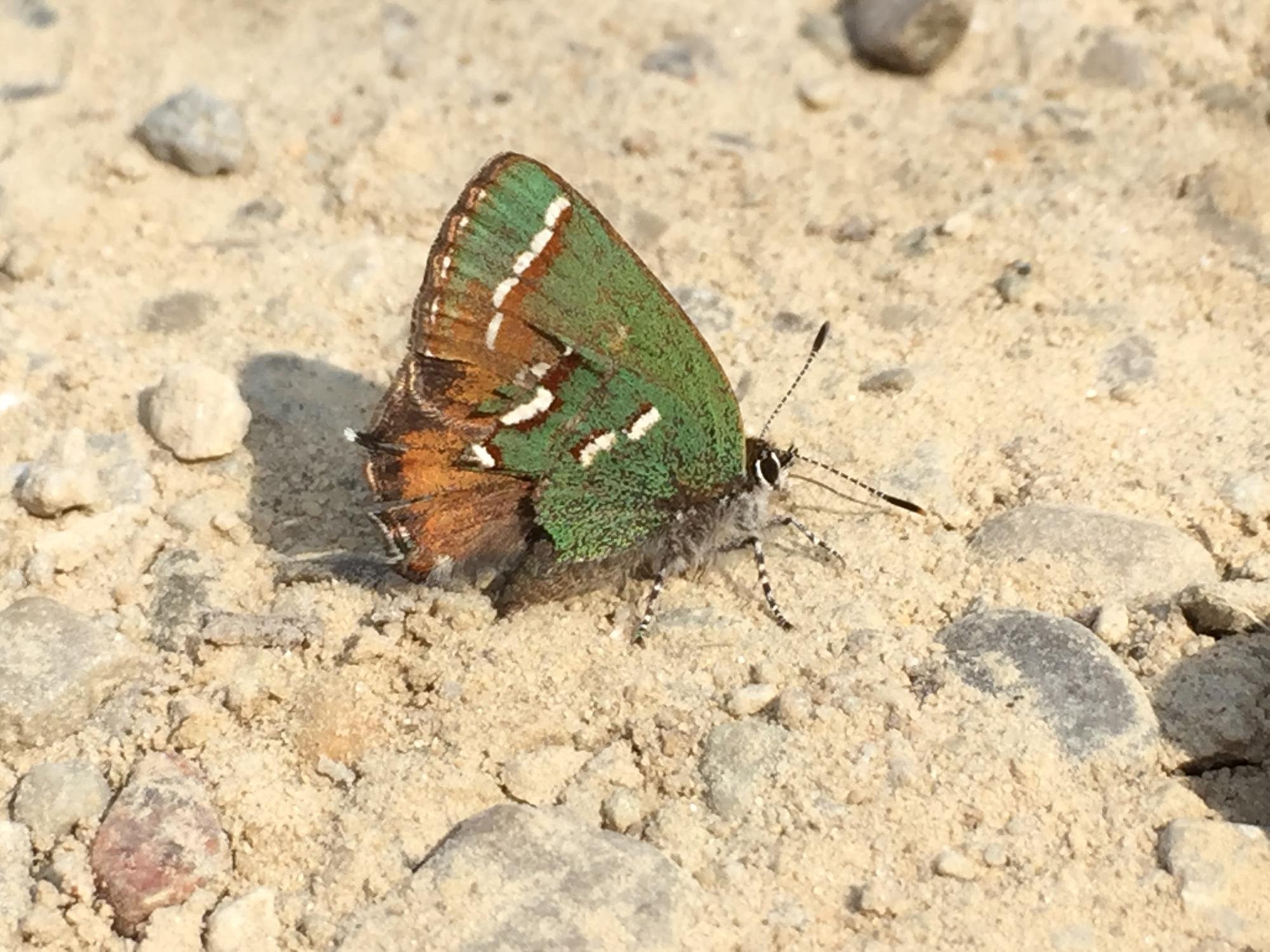
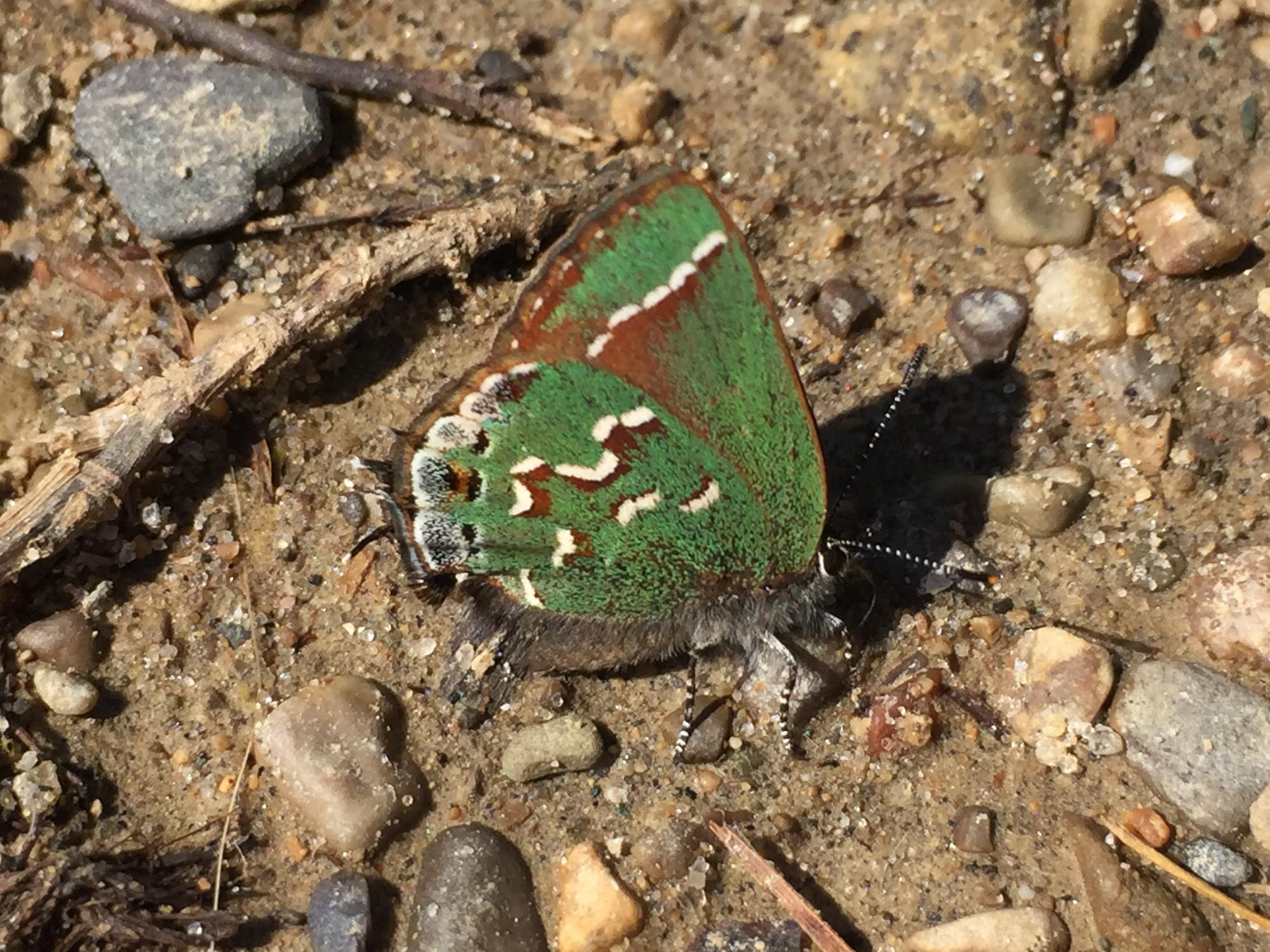
I usually see spring-brood Juniper Hairstreaks puddling at damp soil on the ground. I rarely see them nectaring on flowers (unlike the summer brood).
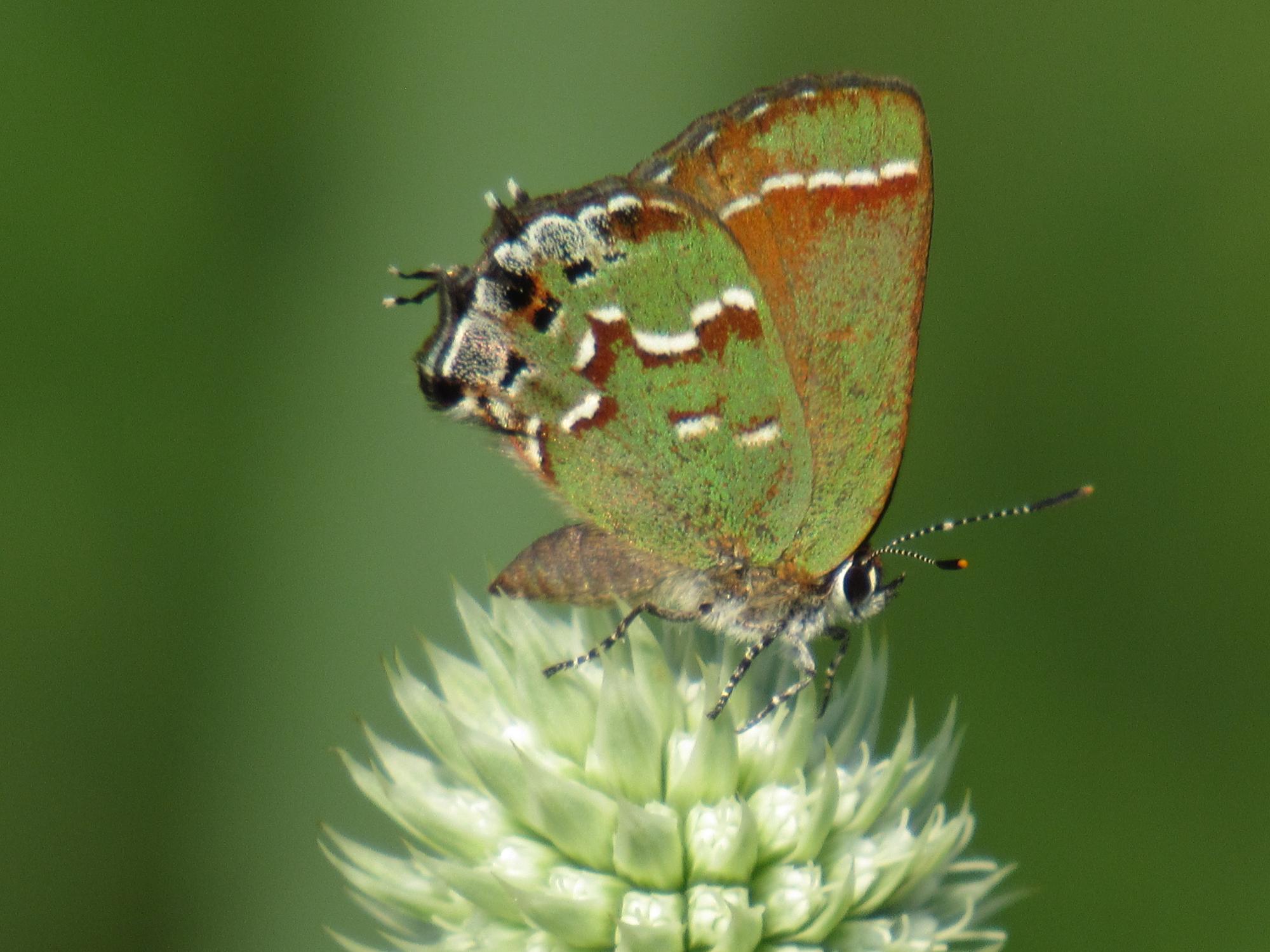
Juniper Hairstreak, on Rattlesnake Master flower. There are many species of green moths, but Juniper Hairstreaks are the only green butterflies you are likely to see in our area.
This Juniper Hairstreak has lost part of his wings, giving us an opportunity to see the beautiful, golden-brown dorsal surface. Most hairstreak butterflies rest with their wings closed, and it is rare to get a shot of one with its wings open.
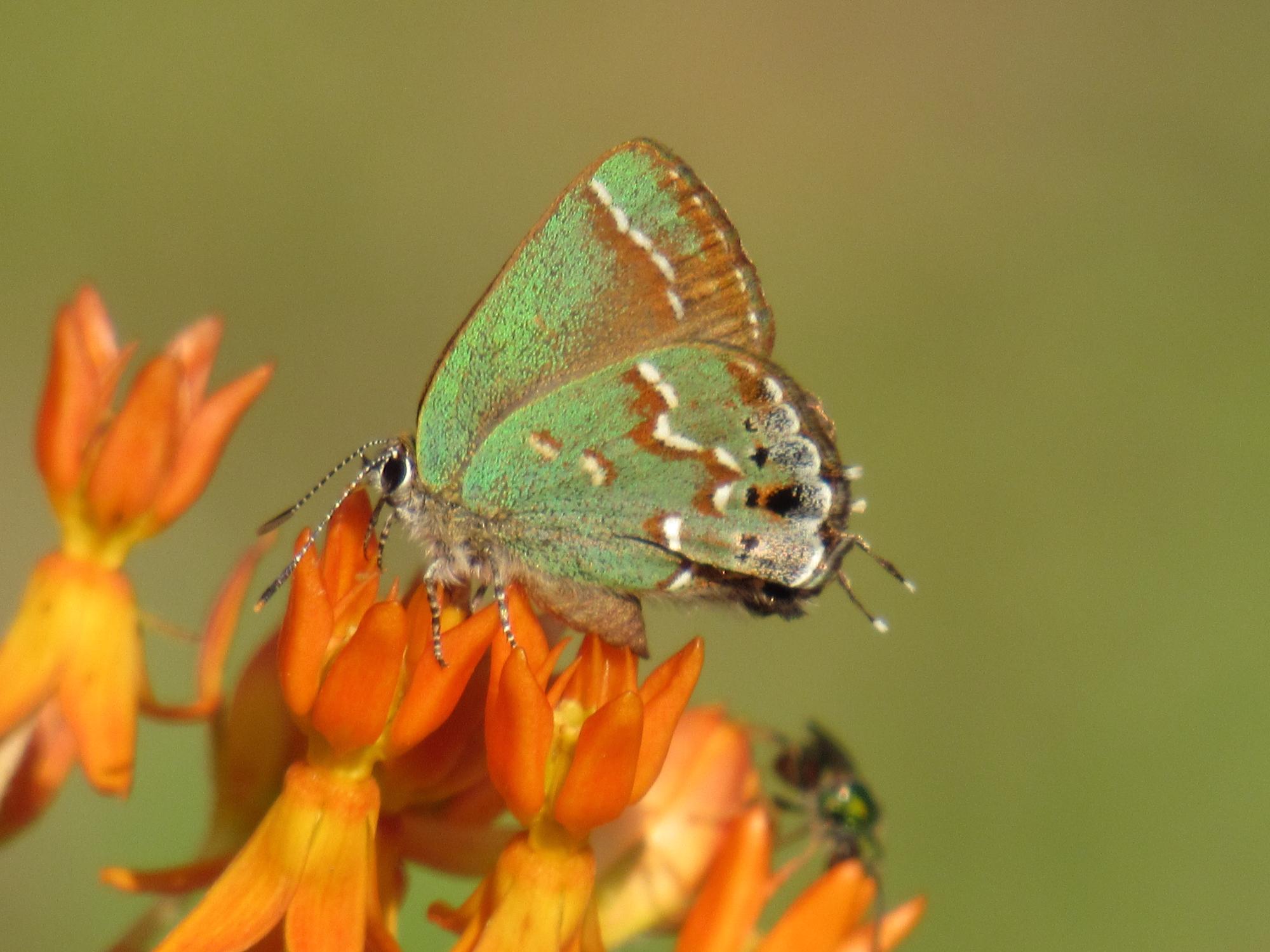
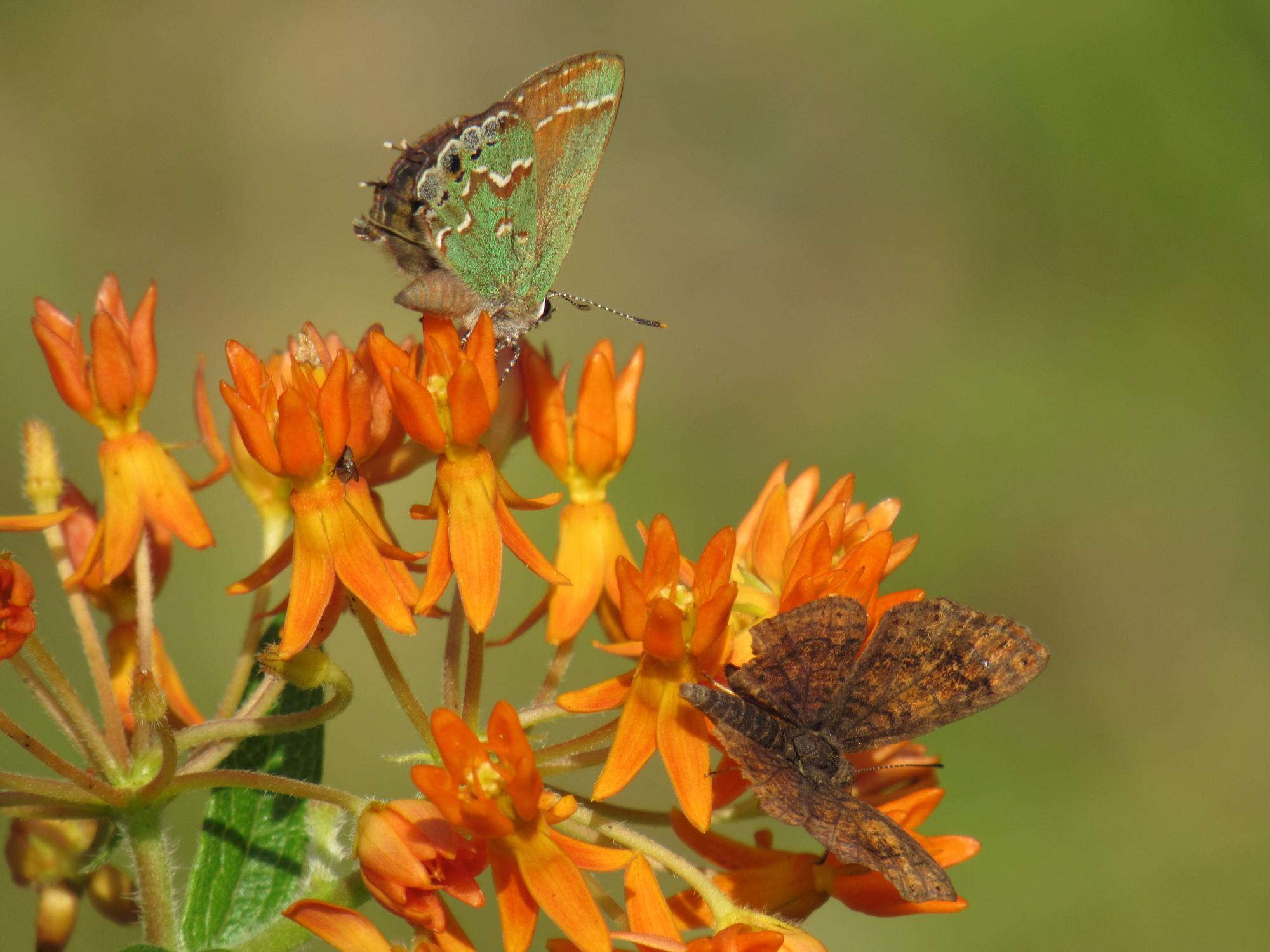
This summer-brood Juniper Hairstreak was visiting butterfly weed (orange milkweed). Milkweed is a favorite nectar source for Juniper Hairstreaks, and they are also fond of Rattlesnake Master and Queen Anne's Lace. Notice the Northern Metalmark butterfly in the lower right corner of this photograph. These two uncommon species fly together at Cox Arboretum.
Juniper Hairstreaks have two broods in our area. The spring brood flies in April and early May, and the summer brood flies in July. In 2018, I found one Juniper Hairstreak on August 28th, which was an unusually late date for this species. It might have been a partial third brood or a delayed emergence of the second brood.
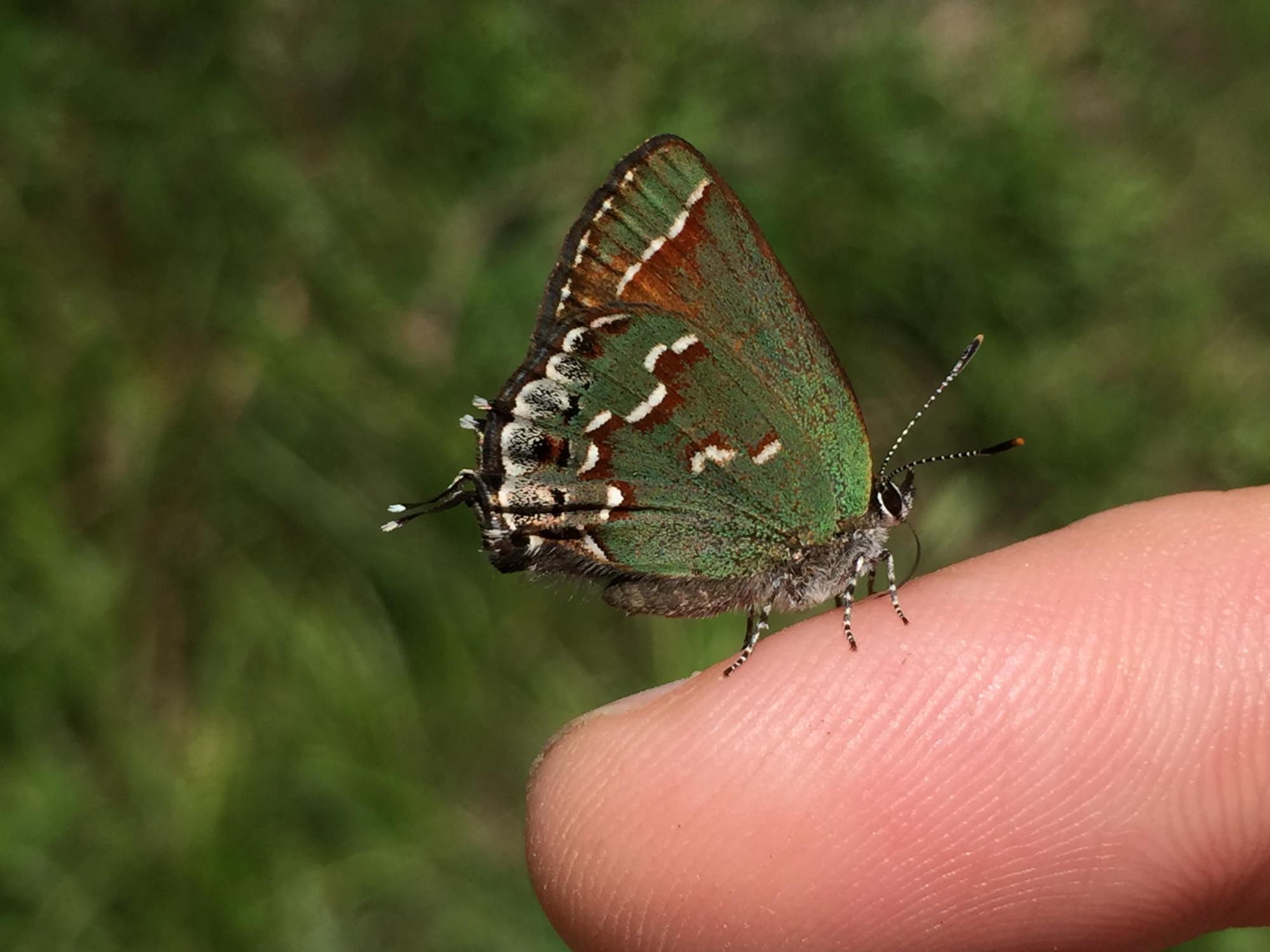
A Juniper Hairstreak, tamely perched on my fingertip. These butterflies are tiny but beautiful!
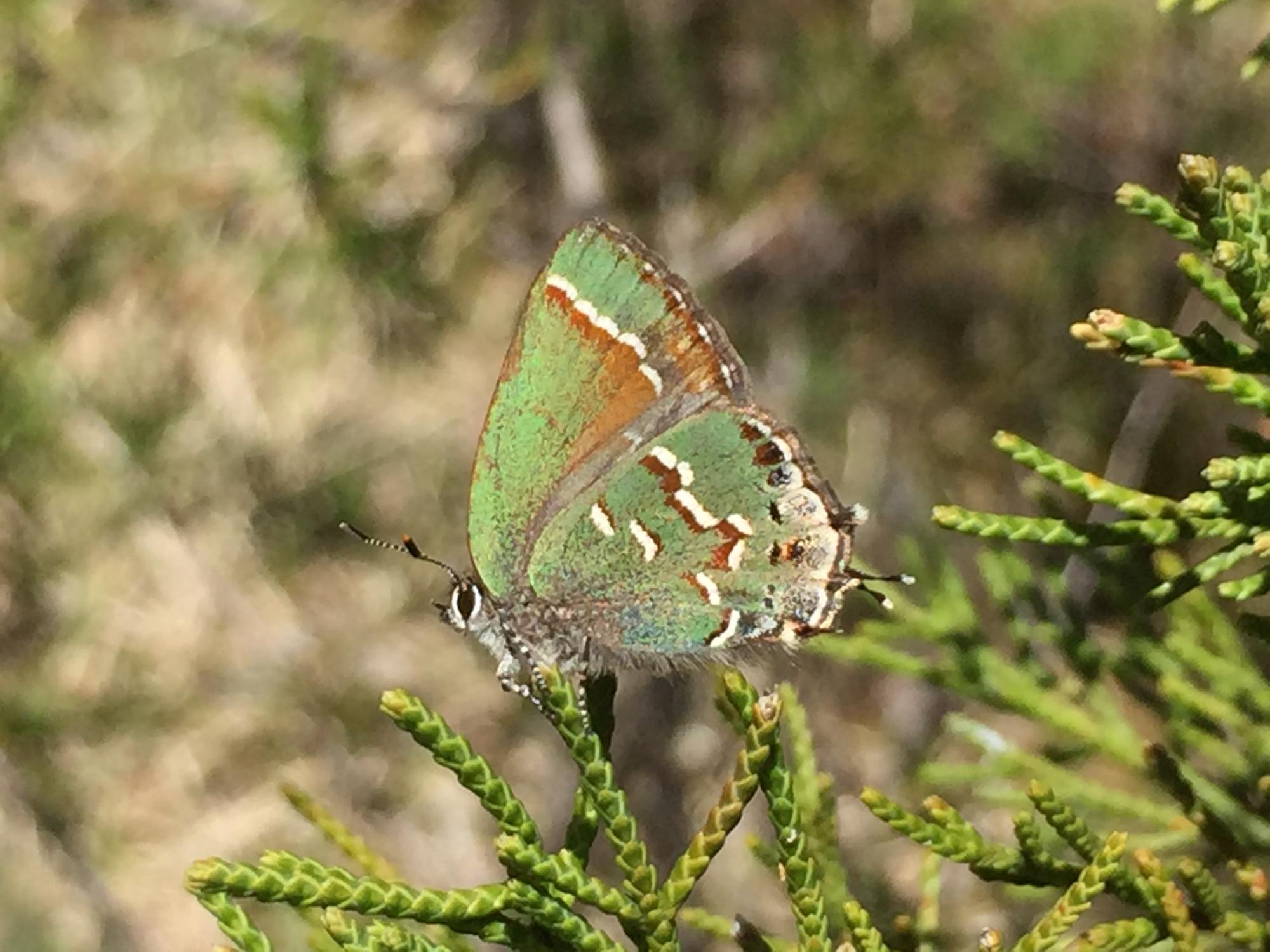
This Juniper Hairstreak is perched in its host plant, an Eastern Redcedar tree.