VARIOUS GRAY MOTHS #2
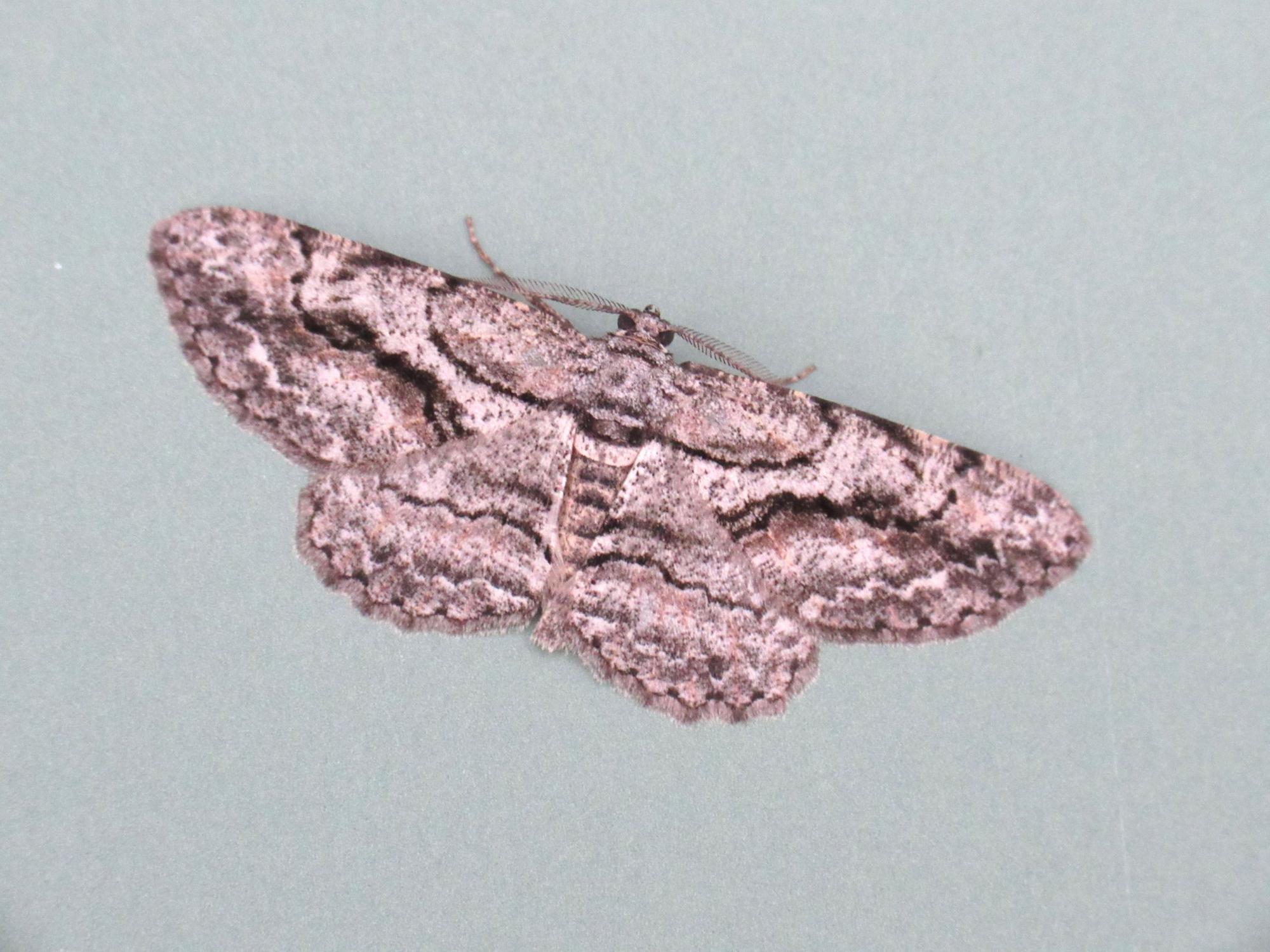
I see Texas Grays in great abundance in September, but I have also found them every month from June through November.
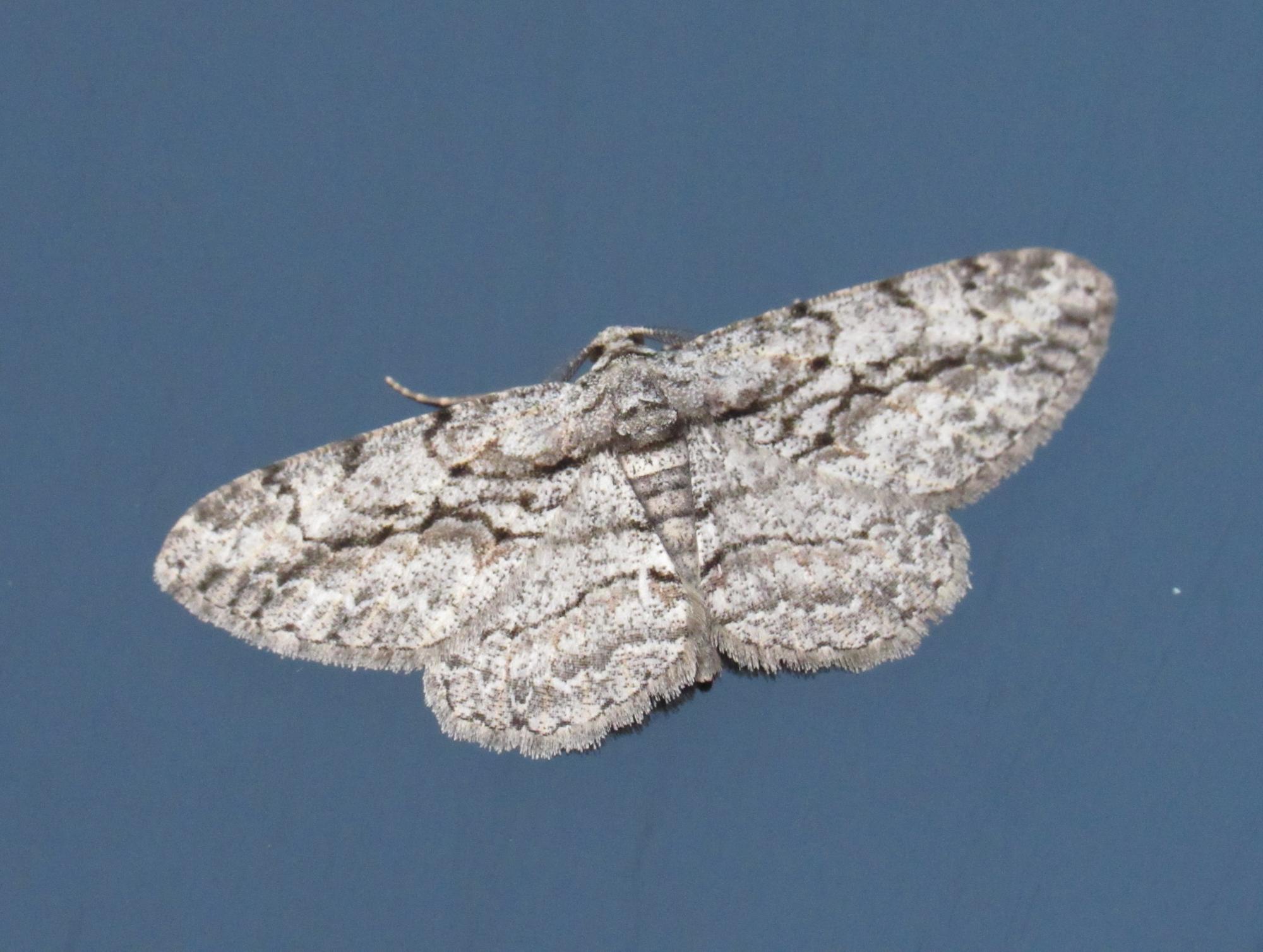
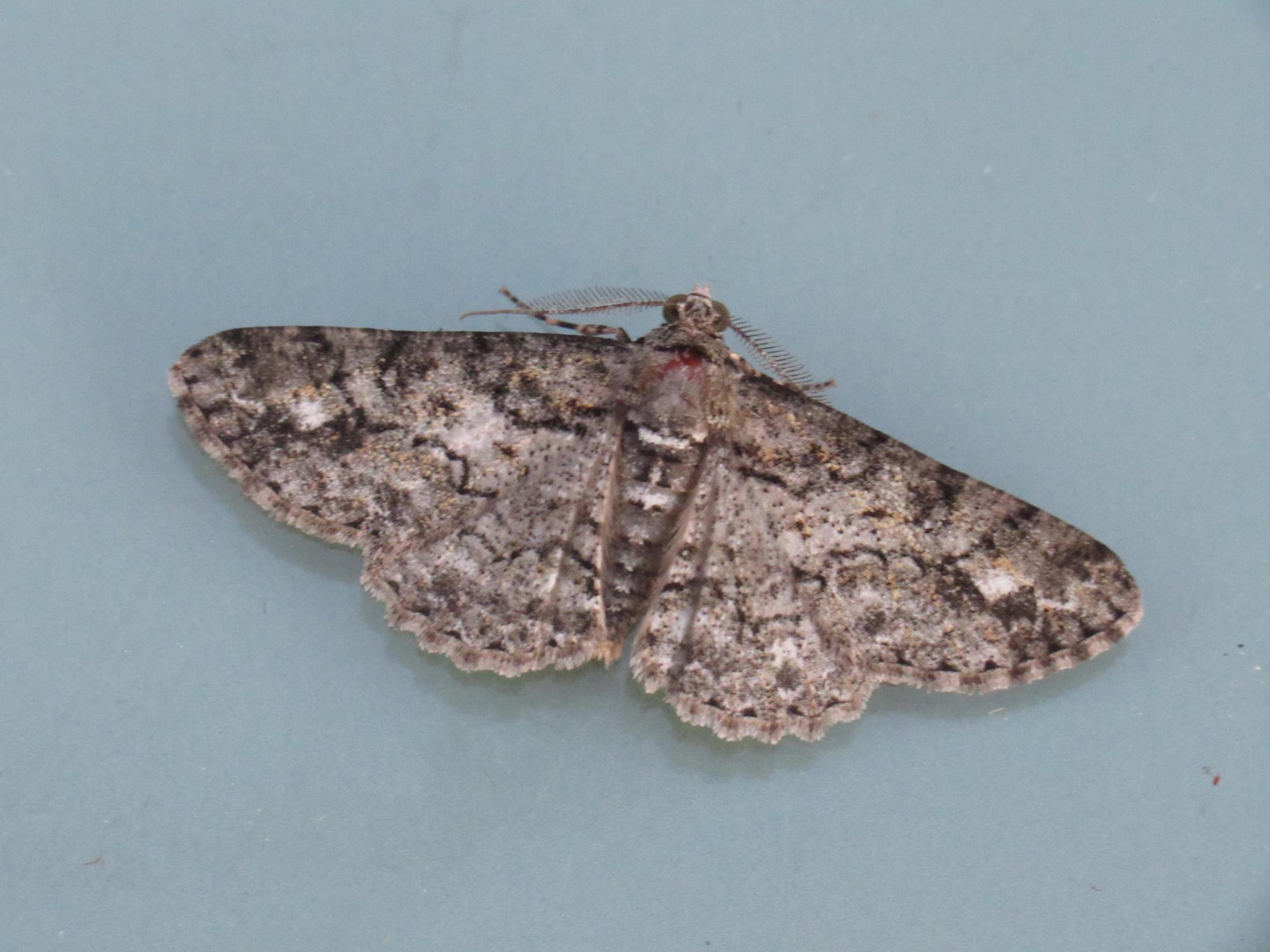
Common Gray moth. Its best distinguishing feature is the white bar on its abdomen (just below the AM line).
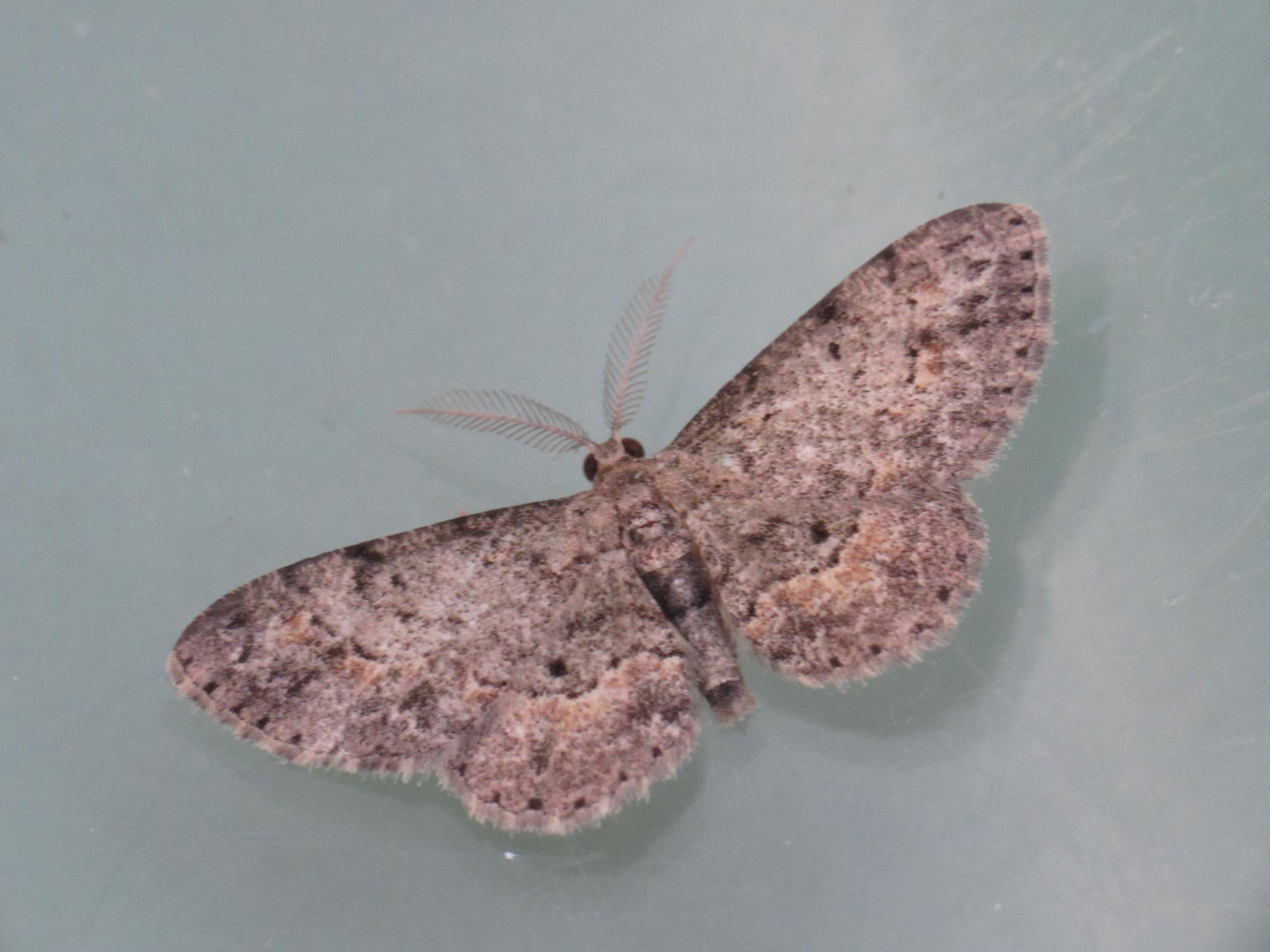
Double-lined Gray moth. This spring-flying species is one of the most abundant species at my lights in April. I also see them in late March and early May, but April is the main flight month for this species.
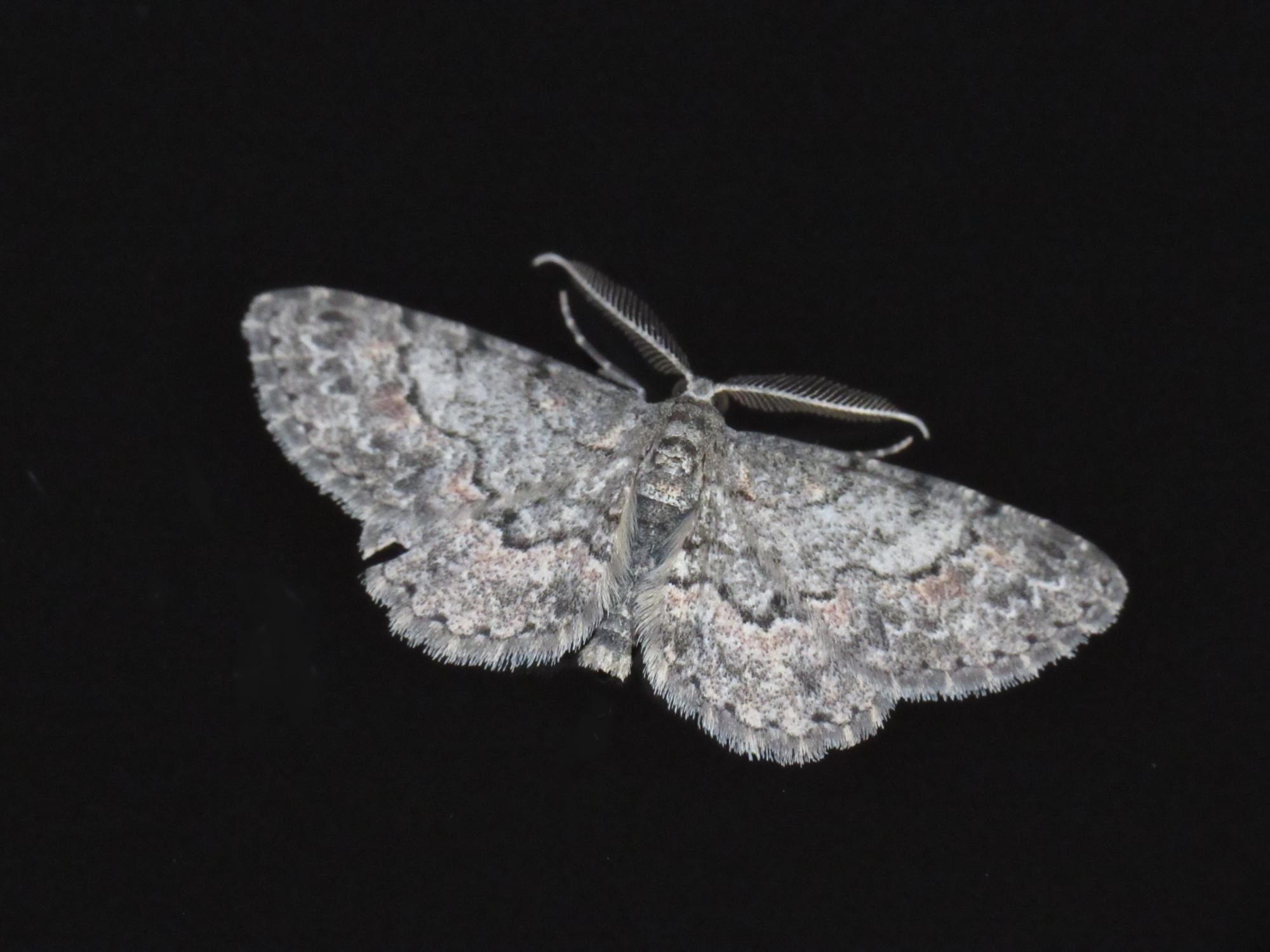
Plumose Gray moth (also known as the Dainty Gray). Apparently, not a very common species. I have found a few individuals in April, June, and July. Notice how straight the lines are; most other "grays" have wavy lines. The caterpillars of this species feed on white and red cedars. I have found adult Plumose Gray moths near cedar groves at Twin Creek MetroPark and Cedar Bog near Urbana.
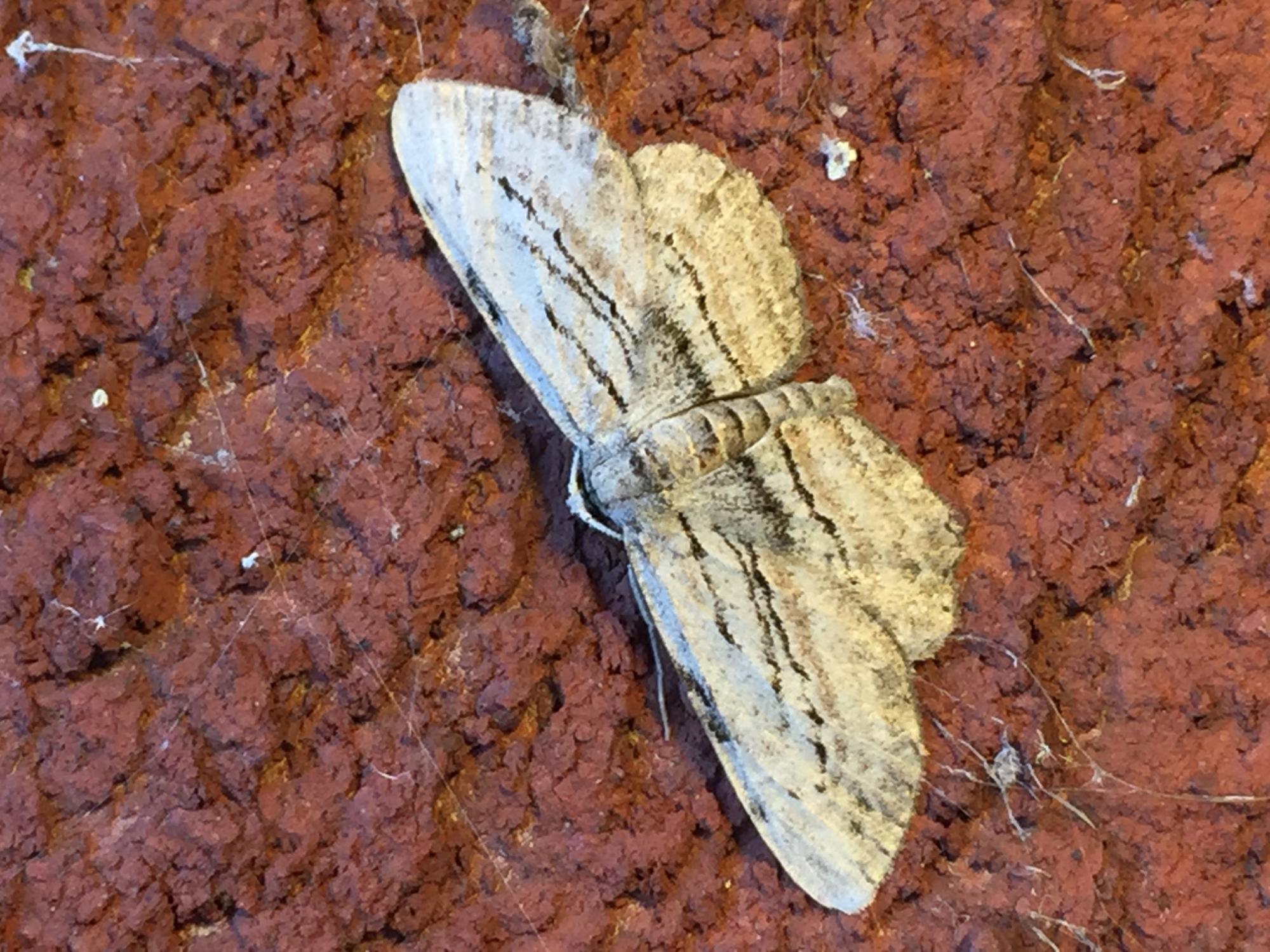
Another Texas Gray. Look for the warm reddish-brown shading below the PM line.
Another Common Gray. I find these moths every month from April through September.
Dotted Gray moth, photographed on May 13, 2023, at Hocking Hills (in eastern Ohio). I have found a couple of these moths at Hocking Hills but never at my home lights.
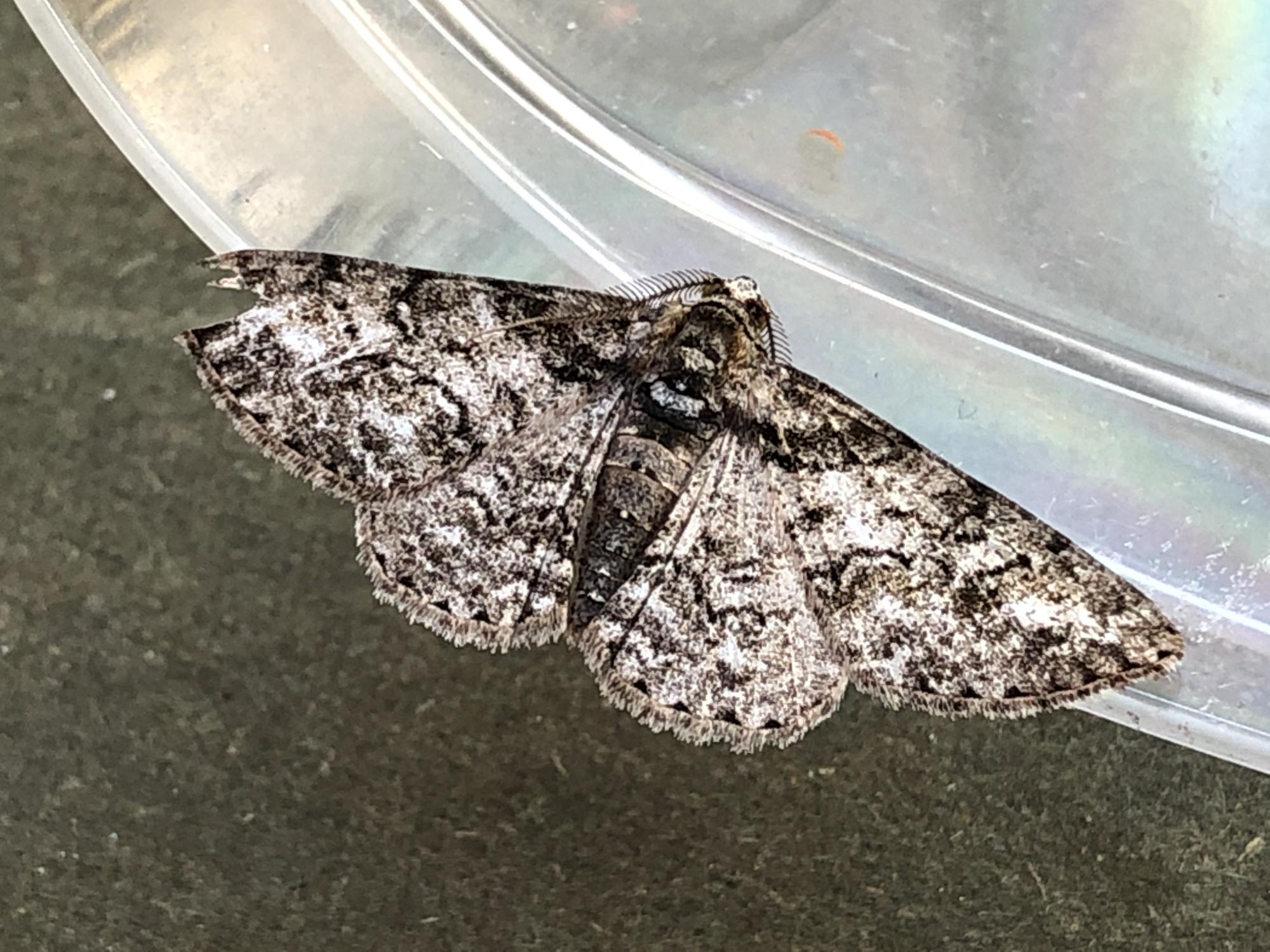
Another Double-lined Gray moth. Note the double AM line and the hollow spots on the wings.
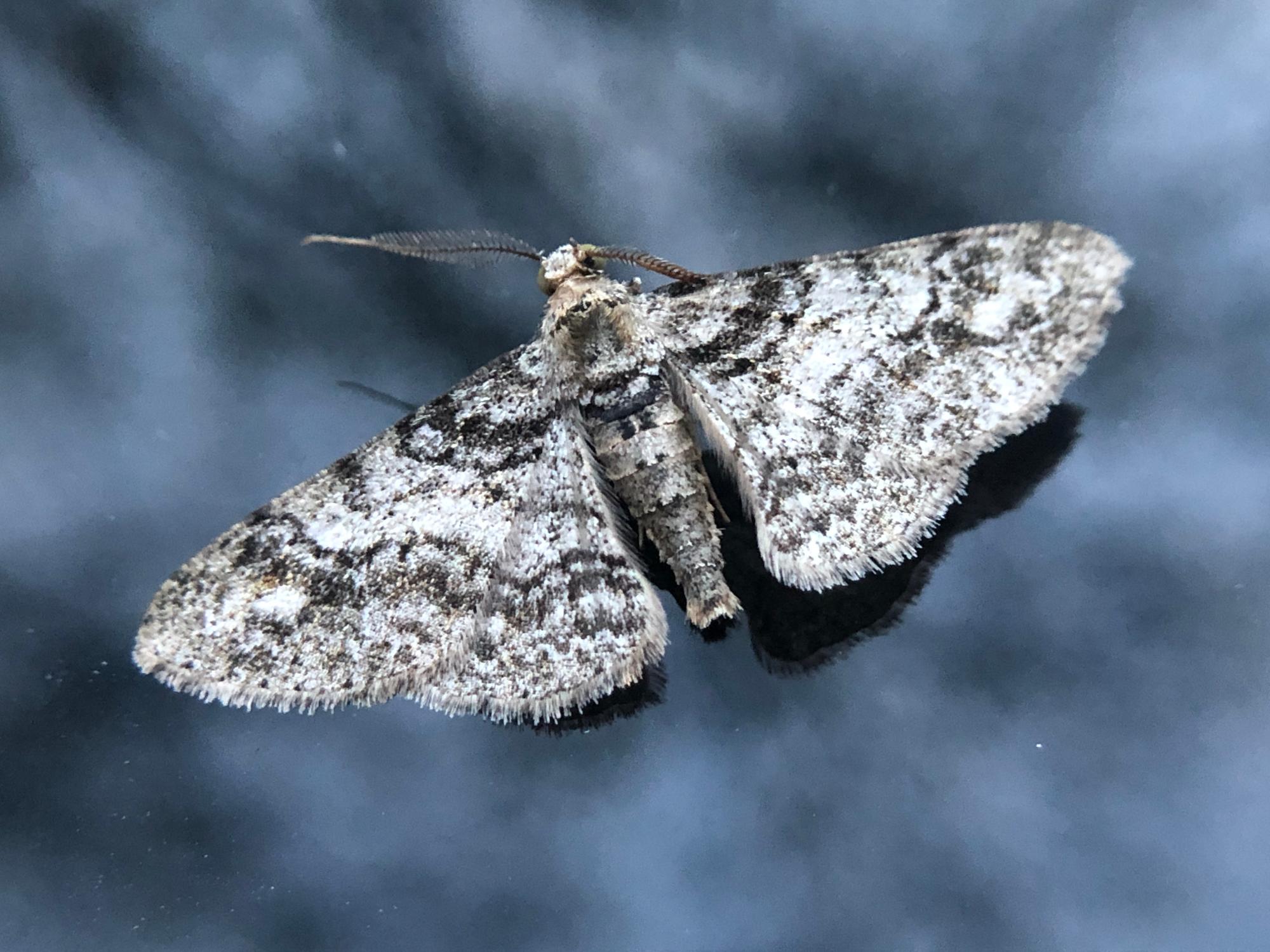
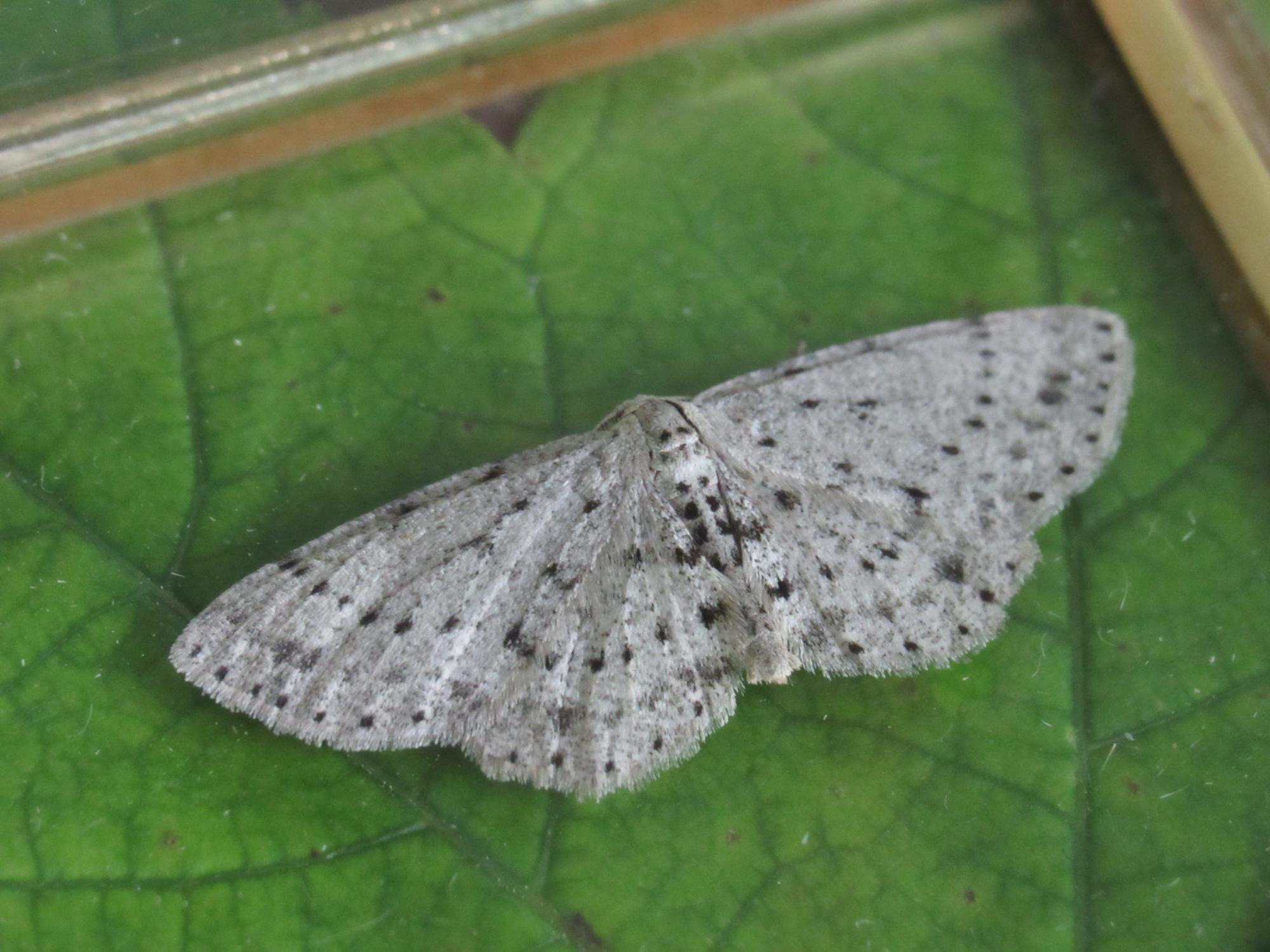

Texas Gray. This moth has a much larger range than its name would indicate. These moths are very common in our area. Some Texas Gray moths appear to have a "skull" on the back of the thorax, although it is not as pronounced as in Europe's famous Death's Head Hawkmoth.
Another Double-lined Gray. Note the round pale patches near the tip of each forewing.